Maryland Home Maintenance Calendar: A Season-by-Season Exterior Checklist
Maryland homes live through four real seasons: freeze-thaw winters, wet springs, humid summers, and a heavy fall leaf drop, with the leftovers of coastal storms mixed in. Almost no exterior fails all at once — it fails by a dozen small neglects, each one cheap to prevent and expensive to repair. This calendar organizes the outside of the house the way contractors think about it: by season, with the tasks that actually matter for your roof, gutters, deck, and siding, and the reason the timing matters.
Use it as a checklist, not a guilt trip. Most items are inspections and small chores. The expensive exterior problems in our other guides — rotted decking under a leak, fascia destroyed by overflowing gutters, a deck frame gone soft — nearly all trace back to a skipped line on a list like this one.
Spring (March–May): Assess the Winter Damage
Winter is the season that does the damage; spring is when you find it.
Roof
- Walk the property and scan the roof from the ground: shingles lifted or missing after winter wind, sagging lines, debris piled in valleys.
- Check the attic on a dry day for new stains, damp decking, or daylight at vents and flashing — winter leaks often show here first. Our guide to the signs your roof needs repair walks through what to look for.
- Look at pipe boots and flashing from the ground with binoculars; cracked rubber boots are the most common spring discovery.
Gutters
- Clean out the spring drop: maple seeds, oak tassels, and pollen sludge clog downspout outlets just as well as fall leaves do.
- Check seams and corners for drips during the first hard rain — freeze-thaw opens marginal sealant joints over the winter.
- Confirm downspouts still discharge well away from the foundation after any winter heaving or damage.
Deck
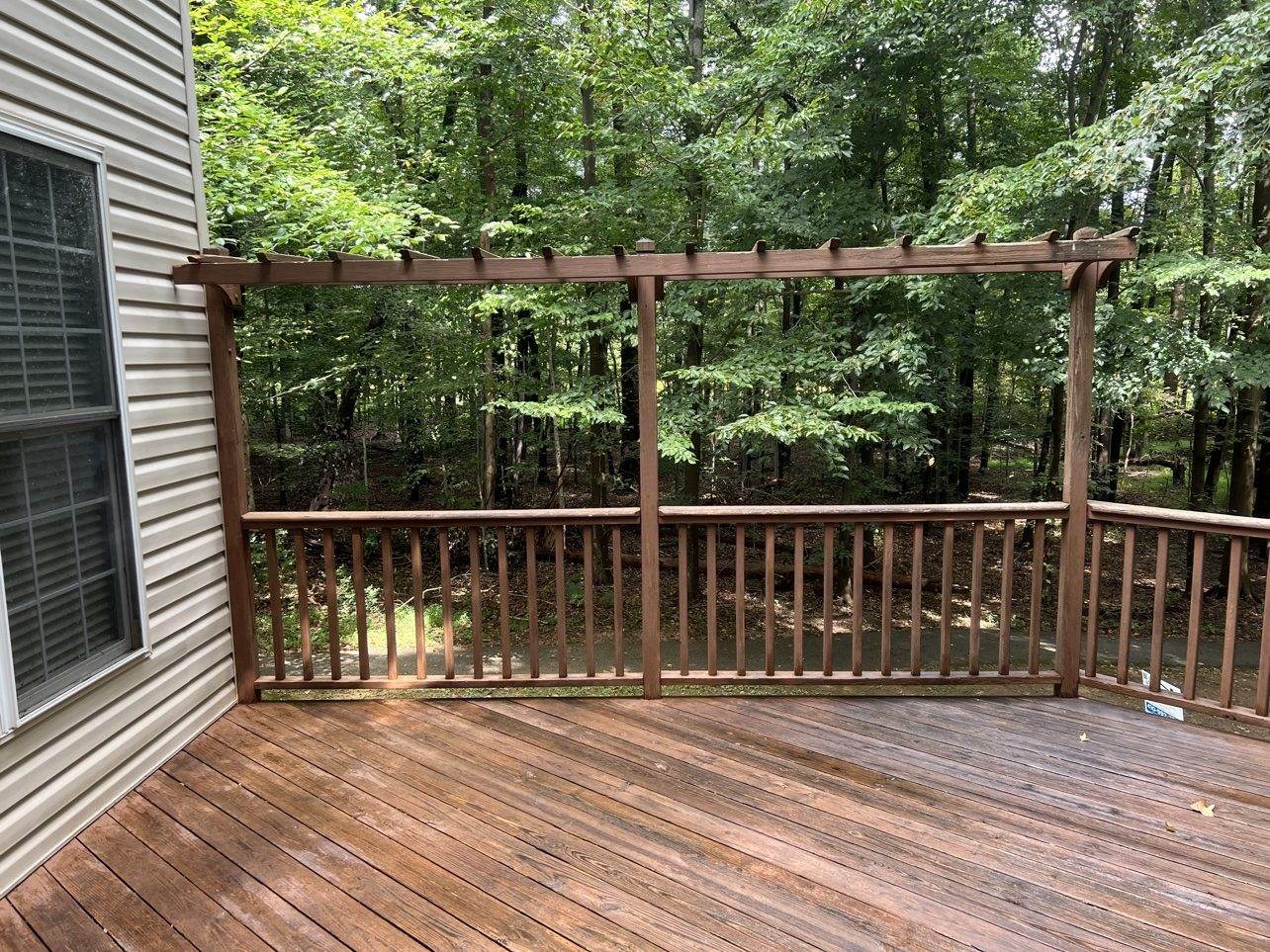
- Wash the deck and inspect while it's clean: soft boards, raised nails or screws, railing posts that move, and green algae in the shaded corners.
- Probe suspect boards and the ledger area with a screwdriver. Spring findings decide whether the year calls for a stain, a restoration, or a bigger conversation.
- Plan staining for a stretch of dry days with moderate temperatures — spring and fall are the friendly windows.
Siding
- Wash off winter grime and the first algae bloom, especially on north and shaded walls.
- Check caulk and sealant around windows, doors, and penetrations; winter movement cracks it, and spring rain finds the gaps.
Summer (June–August): Humidity, Algae, and Storms
Summer in Maryland is hot, humid, and punctuated by serious thunderstorms. Growth and water are the themes.
Roof
- After any major storm, do a ground-level once-over: shingles in the yard, a gutter run hanging lower than it was, tree limbs on the roof. Photograph anything you find, dated — it matters if insurance ever gets involved.
- Peek in the attic on a hot afternoon. A properly ventilated attic is hot; a suffocating one (well above the outside temperature, with a musty smell) is aging your shingles from below and feeding mold.
- Keep branches trimmed back off the roof — summer growth plus storm wind turns them into roof sandpaper.
Gutters
- Summer cloudbursts are the stress test. If a run overflows in a downpour, note exactly where — the location tells you the cause, and our guide to why gutters overflow in heavy rain decodes it.
- Make sure splash blocks and extensions survived spring: summer storms deliver water faster than any other season, and it belongs away from the foundation.
Deck
- Algae and mildew peak now. A cleaning and brightening keeps the surface safe — green deck boards are genuinely slippery when wet.
- If you're staining, work in the morning shade. Stain applied to sun-baked boards dries on contact and laps badly.
- Check for carpenter bees (perfectly round holes, sawdust below) and wasp nests under railings before they become established.
Siding
- This is soft washing season: algae and mildew spread fastest in the humidity, and a soft wash now keeps walls clean through fall.
- Look for siding panels loosened by storm winds — a panel that has unlocked at one end will unzip further in the next storm.
Fall (September–November): The Most Important Season
If you do only one season's list, do this one. Fall is when Maryland homes are made ready — or not — for winter.
Gutters
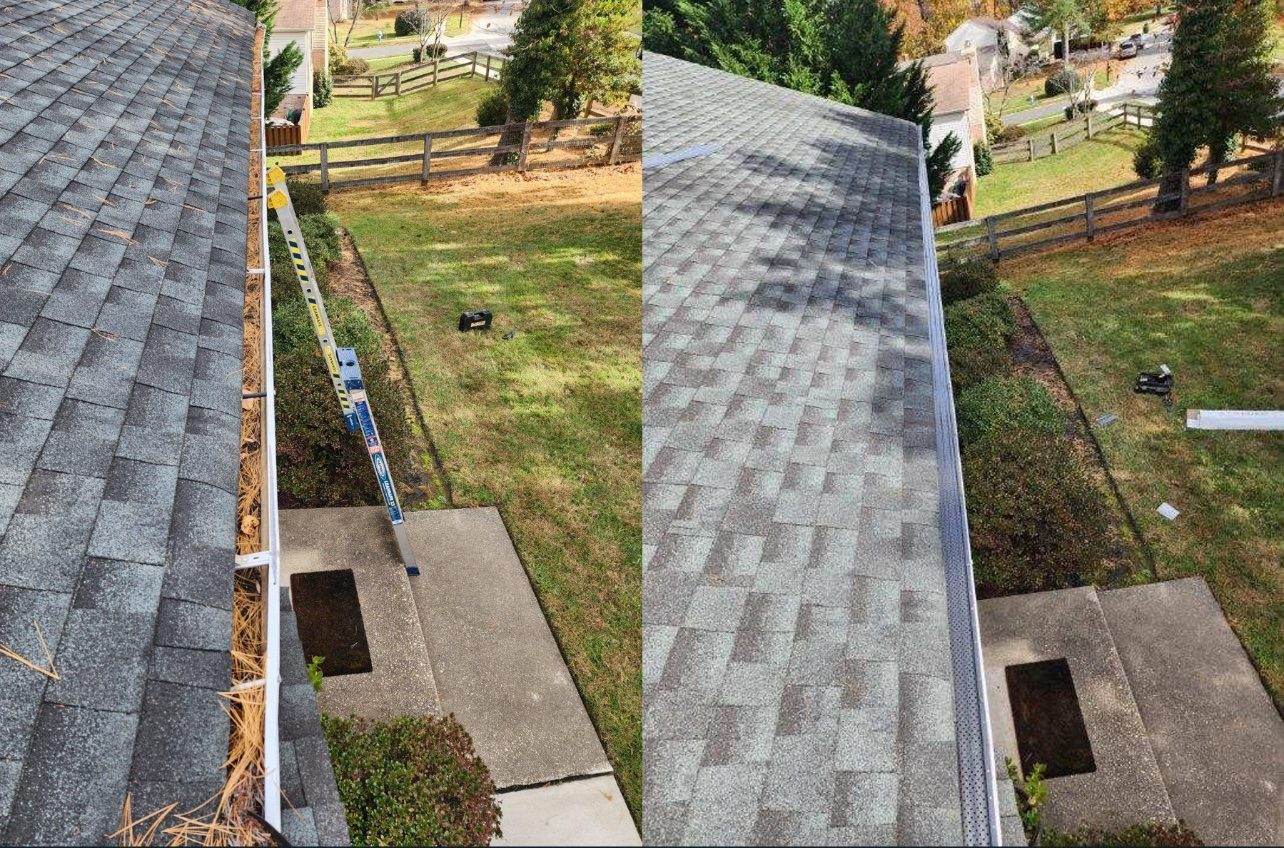
- Clean the gutters after the main leaf drop — for most Maryland homes, sometime between late October and early December, once the oaks have finished. This is the single most valuable maintenance task on this page: packed, wet leaves freeze into a solid mass that adds hundreds of pounds, splits seams, and pulls gutters off the fascia.
- While they're clean, run a hose and watch the flow: standing water means a pitch problem to fix now, not in January.
- If your home sits under heavy tree canopy, fall is when to seriously evaluate gutter guards — they don't eliminate fall maintenance, but they keep the system flowing between cleanings.
Roof
- Get a roof check done before winter: pipe boots, flashing, ridge vents, and any shingles the summer storms loosened. Repairs are faster and cheaper in October than emergency calls in February.
- Rowhouse owners: fall is the last comfortable window for flat roof coating work before cold weather — coatings need warmth to cure. See the flat roof coating guide.
- Clean debris out of valleys and off low-slope sections; piles of wet leaves hold moisture against the roof all winter.
Deck
- Sweep leaves off the deck and keep them off. Wet leaf mats stain the wood, feed mildew, and make the surface treacherous.
- Early fall is the second staining window — dry air, moderate temperatures, and the deck goes into winter protected.
- Store or cover furniture, and drain and put away the hose before the first hard freeze finds it connected.
Siding
- Give the siding a wash if algae built up over summer, so the walls go into the damp season clean.
- Seal gaps around penetrations and trim. In fall, insects and mice are actively looking for exactly those gaps.
- Check that downspout extensions are set for winter discharge — water dumped at the foundation in January becomes ice and heaved soil.
Winter (December–February): Watch, Don't Climb
Winter maintenance is mostly monitoring — from the ground and from the attic.
Roof
- Watch for ice dams in prolonged cold snaps: a ridge of ice at the eave with icicles along the gutter. Ice dams are an attic insulation and ventilation problem expressed on the roof; the fix is indoors, and hacking ice off shingles does more damage than the dam.
- After snow melts, check ceilings and the attic for new stains — melt water finds the failures that rain didn't.
- Do not send anyone onto a snowy or icy roof for a non-emergency. Almost nothing up there can't wait for a thaw; a leak can be managed temporarily from inside the attic.
Gutters
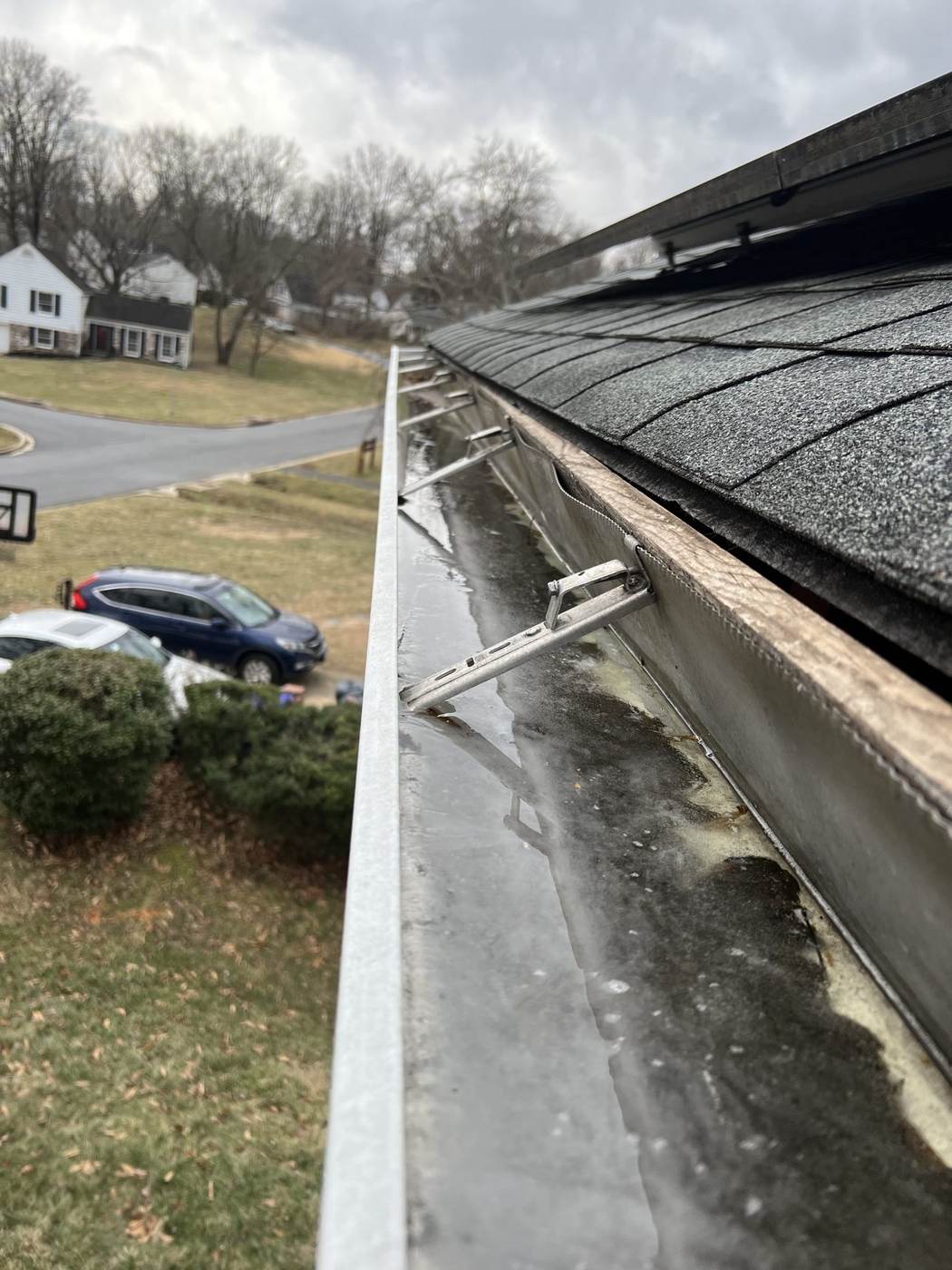
- Icicles along a run and a gutter visibly sagging under ice are signs of a system that went into winter full — note it for spring, and don't chip ice out of the gutter; you'll bend the metal and tear the seams.
- Keep an eye on where melt water lands: ice sheets forming at walkways below a downspout outlet usually mean a discharge problem to fix in spring.
Deck
- Shovel snow with a plastic shovel, along the boards, not across them — metal shovels and ice choppers gouge wood and composite alike.
- Skip the rock salt on wood decks; it accelerates fastener corrosion and dries the wood. Sand gives traction without the chemistry.
Siding & general
- Walk the perimeter after wind storms for loosened panels and trim.
- Use the quiet season to plan: get spring work quoted and scheduled in February. Good contractors' spring calendars fill fast, and the homeowner who books in winter chooses dates instead of taking leftovers.
The Year at a Glance
Twice a year
- Gutter cleaning (late spring and after the fall leaf drop; three to four times under heavy tree cover, or add guards)
- Roof scan from the ground and an attic check
Once a year
- Siding wash (soft wash as needed — shaded homes may need it twice)
- Deck wash and inspection
- Caulk and sealant check at windows, doors, and penetrations
- Downspout discharge check
Every 2–3 years
- Deck stain renewal (the water-bead test decides — see our deck restoration guide)
- Vent boot and flashing close inspection
Every 10–15 years
- Flat roof recoat for coated rowhouse roofs
- Gutter seam and corner resealing (sectional systems need it more often)
None of this is glamorous, and that's the point. An hour or two a season, spent in the right weeks, is what separates the homes that need a repair from the homes that need a rescue. If a check turns up something bigger than maintenance — persistent leaks, soft framing, a roof at the end of its life — our repair vs. replacement framework will help you think through what comes next.