Gutter Guides for Maryland Homeowners
Gutters are a simple system that causes expensive problems when they're neglected, undersized, or hung wrong. These guides explain how gutter sizing, guards, and repairs actually work, and what they cost around Baltimore and Howard County.
- Seamless vs. sectional, in plain terms
- Gutter guards: what works and what doesn't
- Real per-foot costs for Maryland homes
- Overflow, sagging, and pulling away — causes and fixes
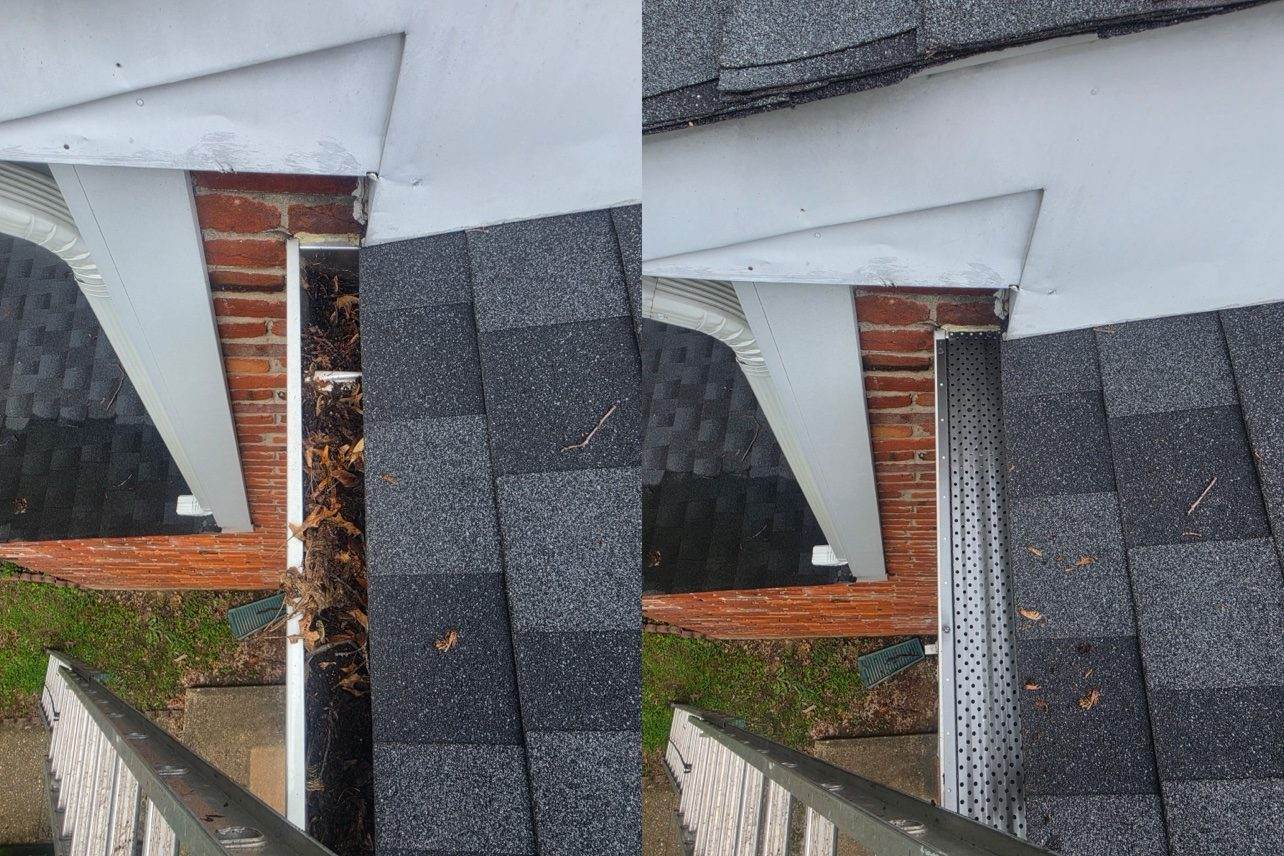
The photos and examples come from real Maryland homes, where mature trees, steep colonial roofs, and freeze-thaw winters put gutters through more than most. The costs here are the ranges Maryland homeowners actually see, broken down line by line.
Gutters guides
How Much Do Gutters Cost in Howard County?
Real gutter prices in Howard County, MD: per-foot costs for seamless aluminum, 5-inch vs 6-inch upcharges, downspouts, guards, and what drives the total.
Read the guide →Seamless Gutters vs. Sectional: What Maryland Homeowners Should Know
Seamless vs. sectional gutters: how they're made, why fewer joints means fewer leaks, real cost differences, and sizing advice for Maryland homes.
Read the guide →Gutter Guards: Do They Actually Work?
Do gutter guards actually earn their keep? An honest look at the types, costs, limits, and maintenance reality.
Read the guide →Why Do Gutters Overflow in Heavy Rain? (And How to Fix It)
Gutters overflowing in heavy rain? The six usual causes — clogs, pitch, undersizing, downspouts, roof valleys, and guard surfaces — how to tell which one you have, and what actually fixes it.
Read the guide →Frequently Asked Questions
How often should gutters be cleaned in Maryland?
Twice a year is the baseline for most Maryland homes — late spring after the seed and pollen drop, and late fall after the leaves come down. Homes under mature oaks, maples, or tulip poplars may need three or four cleanings, especially if the roof valleys dump debris into one section. The fall cleaning matters most: gutters packed with wet leaves freeze solid in winter, and the weight and ice are what pull gutters loose and split seams.
Are seamless gutters worth the extra cost?
For most homes, yes. Sectional gutters are joined every 10 feet or so, and every joint is a future leak and a place for debris to catch. Seamless gutters are formed on site to the exact length of each run, so the only seams are at corners and downspout outlets. The premium over sectional is typically a few hundred to about $1,500 on an average home, and it buys a system that commonly goes 20-plus years with basic cleaning. On a small, simple roof the math is closer; on a two-story colonial it isn't.
What size gutters does my home need — 5-inch or 6-inch?
Most Maryland homes were built with 5-inch K-style gutters, and for modest roof planes they're fine. The case for 6-inch gutters — usually paired with larger 3x4 downspouts — is roof size and pitch: a big, steep roof delivers water fast, and an undersized gutter overflows in heavy rain no matter how clean it is. Upper roofs dumping onto lower roofs are another classic case for upsizing. A good installer sizes by roof area, not habit; the price difference is modest compared with re-doing an undersized system.
Do gutter guards mean I never have to clean my gutters again?
No guard eliminates maintenance entirely, whatever the sales pitch says. Good perforated or mesh guards keep leaves and large debris out and can stretch cleaning intervals from twice a year to every few years, but fine grit, pollen, and seedlings still get in, and the guard surface itself needs an occasional rinse or brush-off. What guards genuinely do is prevent the clogs that cause overflow damage between cleanings. Think of them as insurance and labor reduction, not a permanent exemption — any company promising 'never clean again' is overselling.
Why are my gutters pulling away from the house?
The usual culprit is the fasteners. Older gutters were hung with spikes driven through the gutter into the fascia, and those spikes slowly back out under the weight of water and debris until the gutter tilts and gaps. Rotted fascia boards make it worse — the spike has nothing solid to hold. The durable fix is hidden hangers secured with long screws into the rafter tails, plus replacing any rotted fascia first. Re-nailing a loose gutter without addressing the wood or the fasteners is a short-lived repair.
Why do my gutters overflow during heavy rain?
Overflow has four common causes, and they're often combined: a clog at the downspout outlet, gutters pitched incorrectly so water ponds instead of draining, downspouts too small or too few for the roof area, and gutters simply undersized for the roof they serve. Watch where the water comes over during a storm — overflow at one spot usually means a clog or pitch problem there, while water sheeting over a whole clean run points to sizing. Each cause has a different fix, and guards alone solve none of them.
Questions or a Topic Idea?
Email us — reader questions shape the guides we publish next.
[email protected] Browse the Guides