Why Do Gutters Overflow in Heavy Rain? (And How to Fix It)
When gutters overflow in a heavy rain, water sheets over the front edge, pours behind the run, or spills at one corner — and every gallon of it lands where you least want it: against the fascia, down the siding, and at the foundation. Overflow is a symptom, not a diagnosis. There are really only six common causes, and the fix for each is different — which is why the first step isn't a ladder or a credit card. It's standing outside in the rain, watching where the water actually comes over.
First: Read the Overflow Pattern
The location of the spill is the best clue you'll get, and it's free:
- Overflowing at one spot, fine elsewhere — a local problem: a clog at that downspout outlet, a sagging section holding water, or debris dammed at one point.
- Sheeting over the whole run evenly — a capacity problem: the gutters or downspouts are undersized for the roof area draining into them, or the whole system is uniformly clogged.
- Pouring over at one corner, especially under a valley — concentrated flow: a roof valley is delivering a river to one point faster than the gutter can accept it.
- Water running behind the gutter, down the fascia — an installation problem: the gutter sits too low or too far from the drip edge, or the pitch has failed so water ponds and laps over the back.
Note it, photograph it if you can, and then work the causes in order — they're arranged from most common (and cheapest to fix) to most involved.
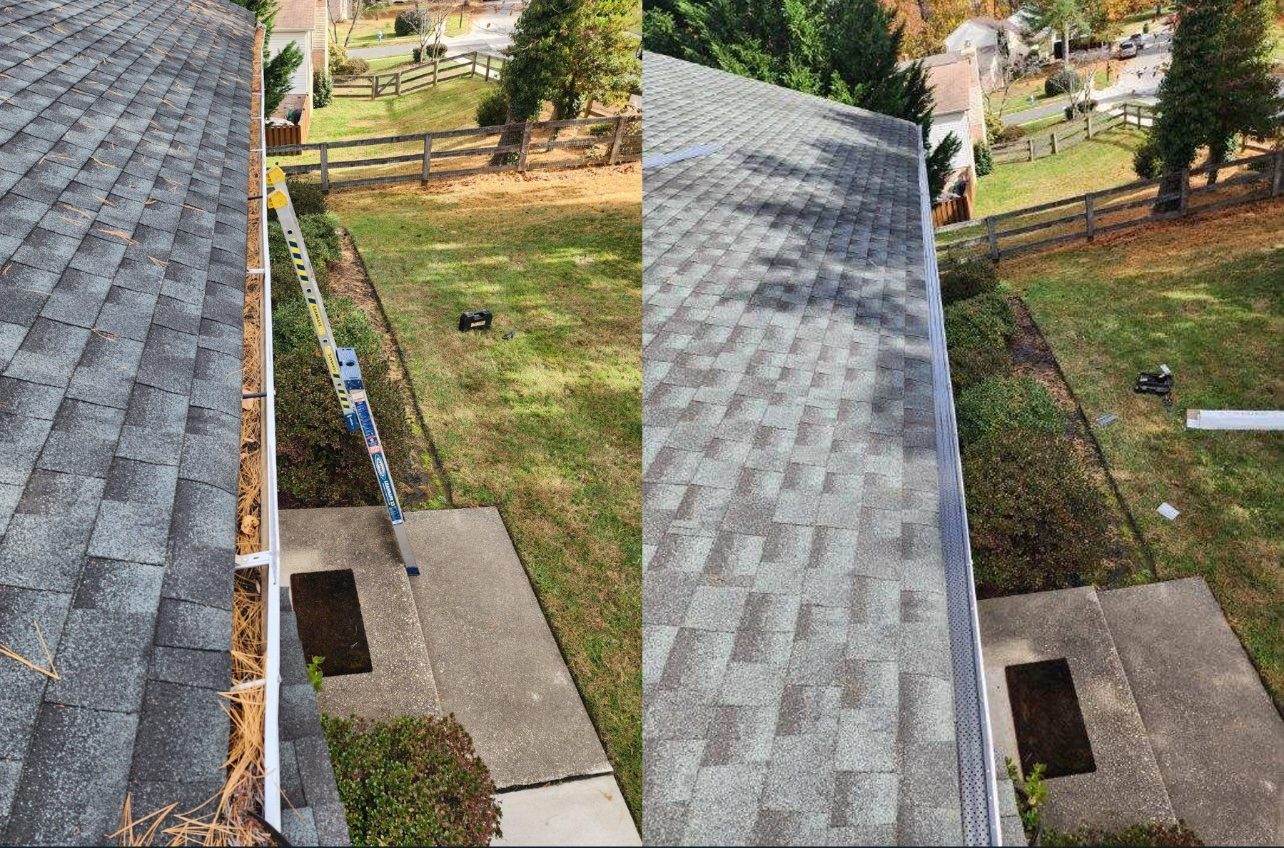
Cause 1: A Clog — Usually at the Downspout
The number-one cause of overflow isn't a gutter full of leaves; it's a handful of them in exactly the wrong place. Debris washes along the gutter and piles against the downspout outlet, or packs into the first elbow below it. The gutter itself can look almost clean from the ground while functioning like a dammed creek. In a moderate rain the water finds its way through; in a heavy one it backs up and over.
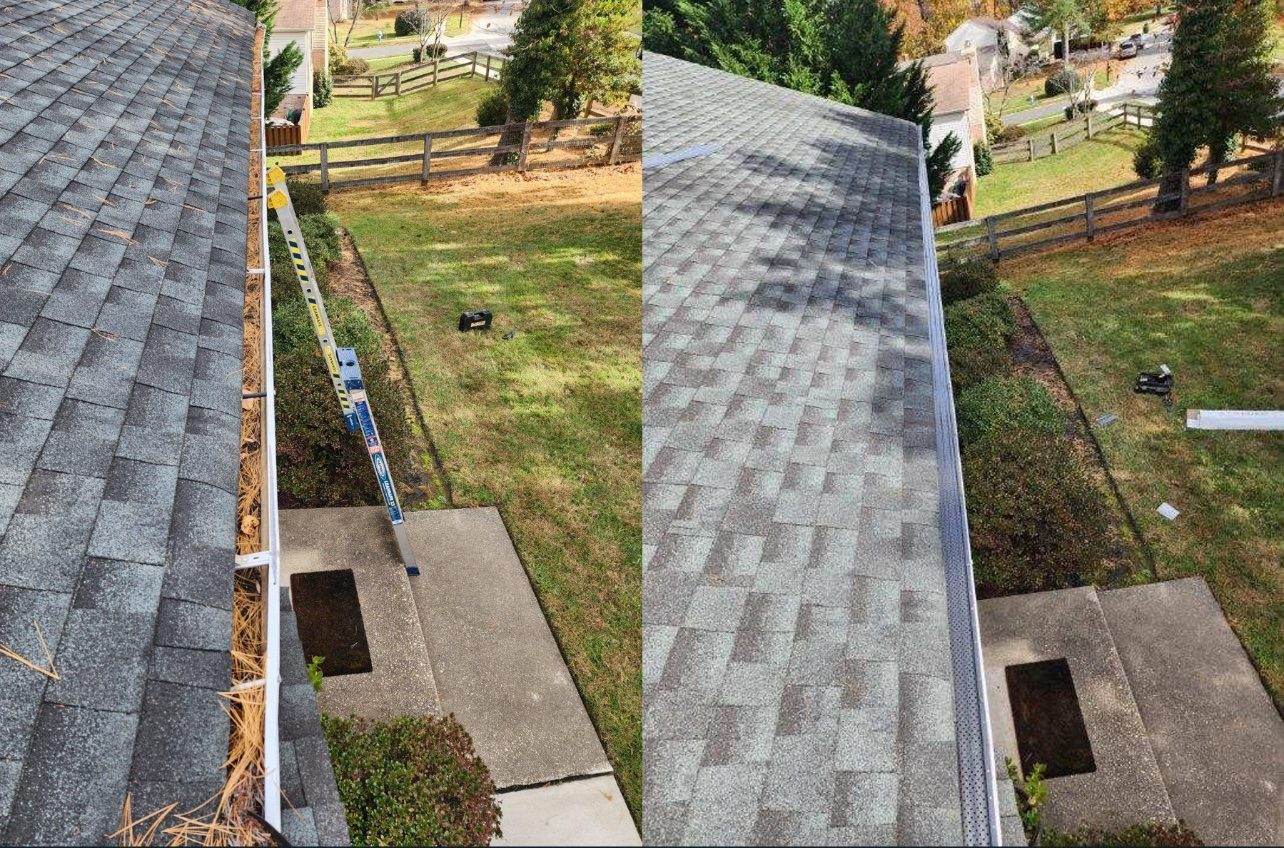
The test: during or right after rain, check whether the downspout is discharging at full flow or trickling. A clogged outlet is a cleaning problem — clear the outlet and elbows, flush the run with a hose, and confirm full flow. If clogs at the outlet are your recurring story, that's the legitimate case for gutter guards: they keep the dam from forming.
Cause 2: Wrong Pitch and Sagging Runs
Gutters are supposed to slope — gently, about a quarter inch per 10 feet — toward the downspout. When hangers loosen or spikes back out (the classic failure on older homes), sections go level or tilt backward. Water then ponds in the low stretch instead of draining, and ponded water plus a heavy rain equals overflow at the lowest point of the front edge, often far from any clog.
The test: on a dry day, look for the tide lines and dirt residue that mark standing water, or rest a hose in the run and watch where water sits. The fix is rehanging, not cleaning: the run comes down or gets re-supported on screw-secured hidden hangers, pitched correctly, with any rotted fascia behind it replaced first — screws into rotten wood are just slower nails.
Cause 3: The Gutters Are Undersized for the Roof
A 5-inch gutter under a modest ranch roof is adequate. The same gutter under a large, steep colonial roof — where a big roof plane accelerates a lot of water into one run — can be overwhelmed in every serious storm no matter how clean it is. Steepness matters as much as area: water arrives faster off a steep pitch.
This is the overflow pattern that cleaning never fixes. The remedies are capacity: 6-inch gutters (which hold roughly 40% more water than 5-inch), larger downspouts, or both. Our Howard County gutter cost guide covers how sizing feeds into pricing, and the seamless vs. sectional guide explains why replacement is the moment to get sizing right.
Cause 4: Downspouts Too Small or Too Few
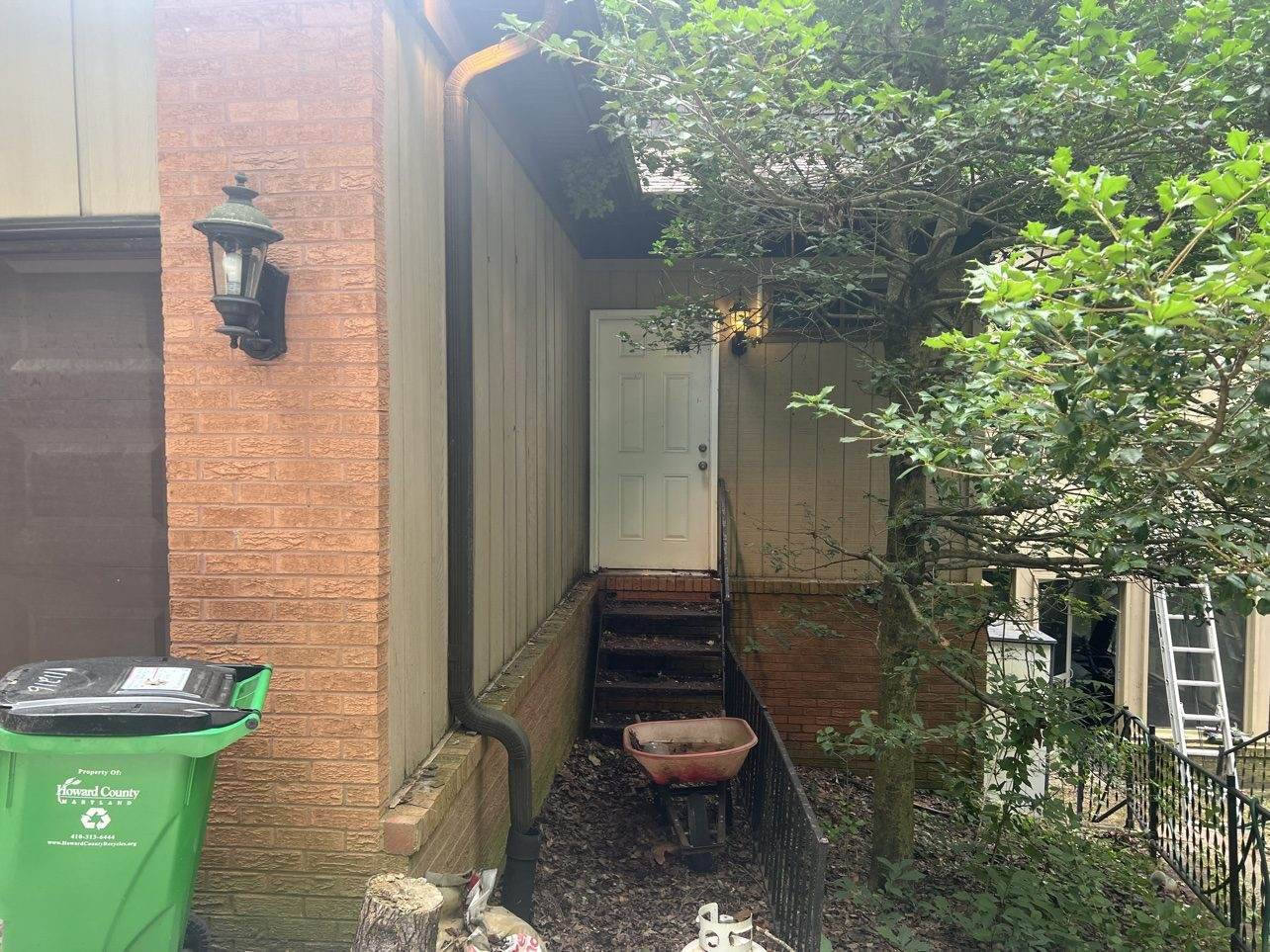
Downspouts are the throttle on the whole system. A long run served by one small 2x3 downspout backs up even if the gutter itself could hold more, because the water can't leave fast enough. Upgrading to 3x4 downspouts roughly doubles discharge capacity per downspout, and adding a second downspout to a long run is often the cheapest capacity fix there is — cheaper than replacing the gutters. Underground drain lines count too: a downspout that discharges into a clogged or crushed buried line is functionally capped, and it will back up and overflow at the first elbow.
Cause 5: Valleys and Inside Corners Overshoot
Where two roof planes meet, a valley concentrates all their water into a fast-moving stream aimed at one point of the gutter — usually an inside corner, the hardest-working and most clog-prone spot in the system. In a downpour, the stream can literally overshoot the gutter's front edge or overwhelm the corner miter. Splash guards (a short deflector panel at the corner) and keeping that corner religiously clean are the usual answers; sometimes the valley itself needs a diverter to slow the water down.
Cause 6: The Guard Surface Becomes the Dam
Guards keep debris out of the gutter — but in a cloudburst, the debris that hasn't been cleaned off the guard surface matters. Wet leaves mat flat over perforated covers, seed pods paste over mesh, and the rain sheets across the mat and over the edge without ever entering the gutter. The gutter beneath is clean and empty; the overflow is real anyway. This is the maintenance that guard owners still owe: a brush or blower pass over the surface a couple of times a year, especially in fall. If your overflow happens only during the heaviest bursts and your guards carry a mat of wet debris, you've found your cause — and it's a ten-minute fix.
What Overflow Does If You Ignore It
Overflow is not a cosmetic event. Water behind the gutter rots the fascia board the gutter hangs from — eventually the repair includes carpentry. Water over the front stains and soaks siding (our siding guide covers what chronic wetting does to it), erodes the soil line, and pools at the foundation, where it contributes to basement seepage. Overflow in winter adds ice weight to a run that may already be sagging. Every one of those downstream repairs costs more than every fix listed above.
Fix in This Order
- Clean and flush — gutters, outlets, elbows, and the underground line if there is one.
- Correct pitch and hangers — rehang sagging runs on screws into sound wood.
- Add discharge capacity — a second downspout or 3x4 upgrades on the runs that back up.
- Address the corner — splash guard where a valley fires into a corner.
- Upsize the system — 6-inch gutters when the roof area simply outclasses a clean, well-pitched 5-inch system.
Work the list in order and stop when the overflow stops. Most homes quit at step one or two — which is exactly why replacing an entire gutter system for what turns out to be a clogged elbow is the expensive mistake this guide exists to prevent.