Roof Repair vs. Roof Replacement: How to Tell What You Actually Need
A lot of roofs that get replaced could have been repaired — and a fair number of patched roofs should have been replaced. The right answer isn't a sales pitch; it's a decision framework. Here's how contractors in Maryland actually think through it.
Start With Roof Age vs. Expected Shingle Life
Every shingle roof has a working life, and in Maryland that number is more specific than the warranty paperwork suggests. Architectural (dimensional) shingles — what most homes here have — realistically last 20 to 30 years in our climate. Three-tab shingles, common on older homes and rental properties, tend to land around 15 to 25 years.
Maryland's weather is the reason those ranges have a wide spread. Freeze-thaw cycles in winter work water into tiny cracks and expand them. Hot, humid summers bake shingles and dry out seal strips. Wind events — and the I-95 corridor gets its share — lift tabs and break seals. A roof that would last 28 years in mild weather might give you 22 in a Maryland winter-and-summer gauntlet.
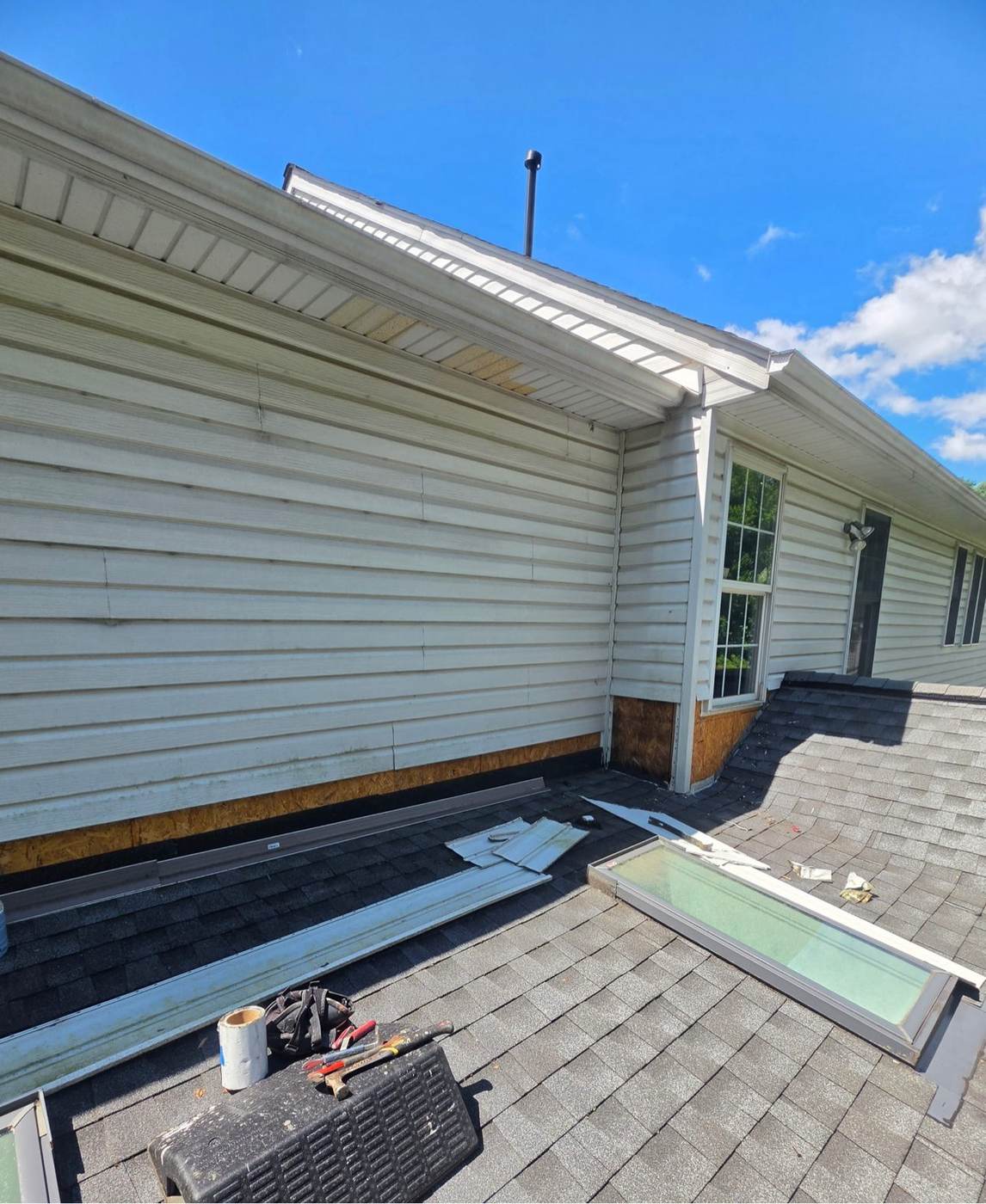
Here's the practical way to use age: if your roof is under 15 years old, repair is the default answer unless the damage is catastrophic. If it's 15 to 22 years old, you're in judgment-call territory — repair makes sense if the damage is localized and the decking is sound. If it's over 22 to 25 years old, replacement starts looking smarter, because money spent on an aging system has a shorter payoff window.
Don't know your roof's age? Check the previous owner's disclosure, county permit records, or the shingle style itself.
are handy for a safe ground-level look — no ladder required for most of this homework.
How Widespread Is the Damage?
This is the second question, and it matters more than most homeowners think. A roof can have a serious problem that is also a small problem — a leak at one pipe boot, a few shingles blown off one slope, a ridge cap beaten up by wind. Localized damage on an otherwise healthy roof is a repair job, full stop.
Signs the damage is localized and repairable:
- A single leak with a clear, traceable source (a vent pipe, a chimney, one valley)
- Missing or lifted shingles confined to one area, usually after a storm
- Curling or granule loss limited to one slope (often the south-facing one, which takes the most sun)
- Flashing failures at one penetration while the field shingles still look good
Signs the damage is widespread:
- Granule loss across most slopes — check your gutters; if they're full of sandy grit, the shingles are shedding their protective layer everywhere
- Curling, cupping, or cracking shingles in multiple areas
- Several leaks in different parts of the house, or a leak you can't trace to one spot
- Shingles that crumble or tear when a roofer lifts them to make a repair — if the material can't survive being worked on, it's telling you something
One practical test: can the shingle be sealed back down? Repairs depend on lifting surrounding shingles and tucking new material under them. If the existing shingles crack or split when handled, the roof is done taking repairs — even at only 18 years old.
Decking Condition: The Real Decider
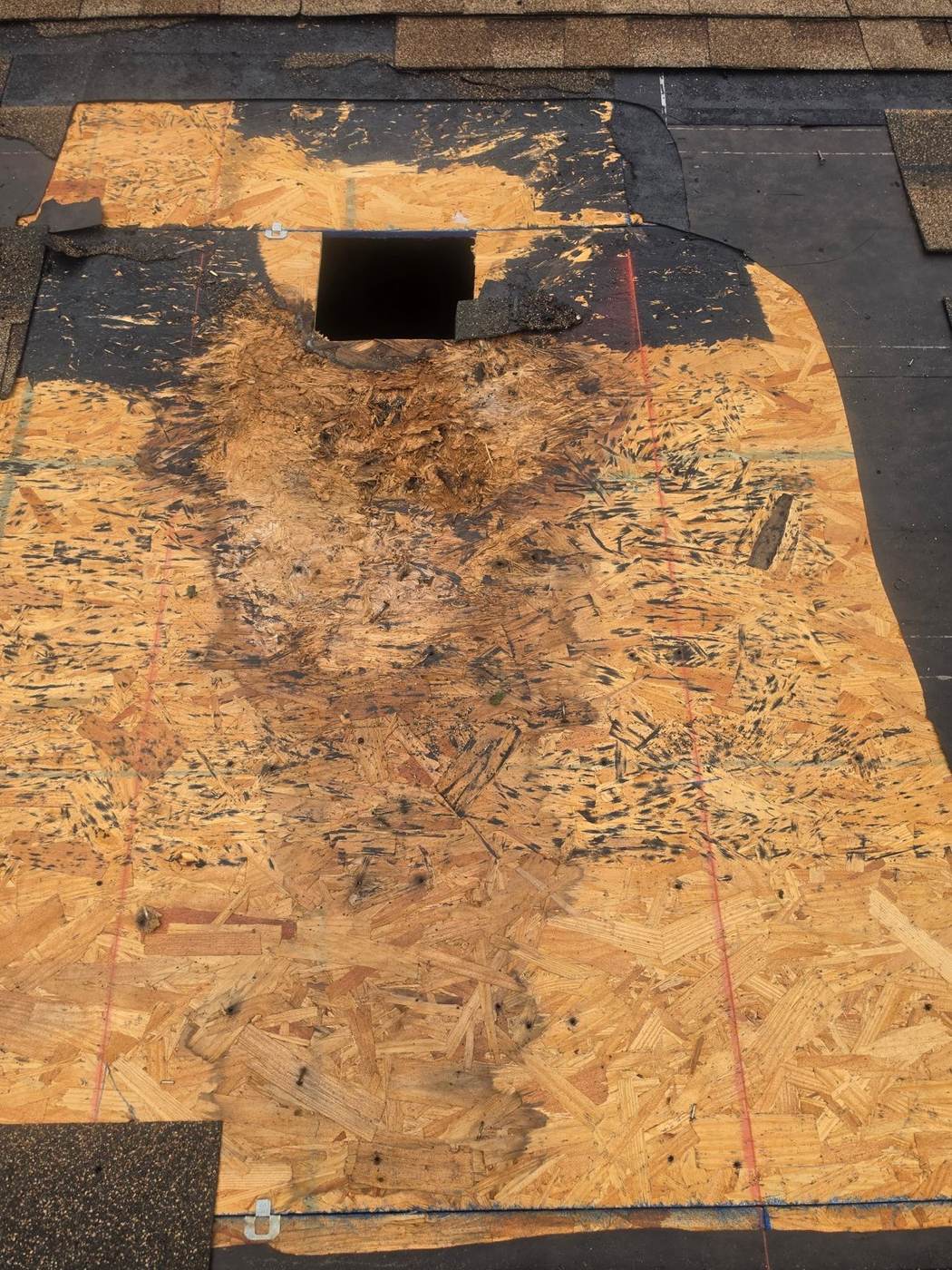
Here's the factor that settles more repair-vs-replace debates than anything else: the condition of the roof decking (the plywood or OSB sheathing underneath the shingles).
From the attic, look for plywood that sags between rafters, feels soft, shows dark water staining across broad areas, or has visible mold. From the roof surface: soft spots that give underfoot and shingles that won't lie flat.
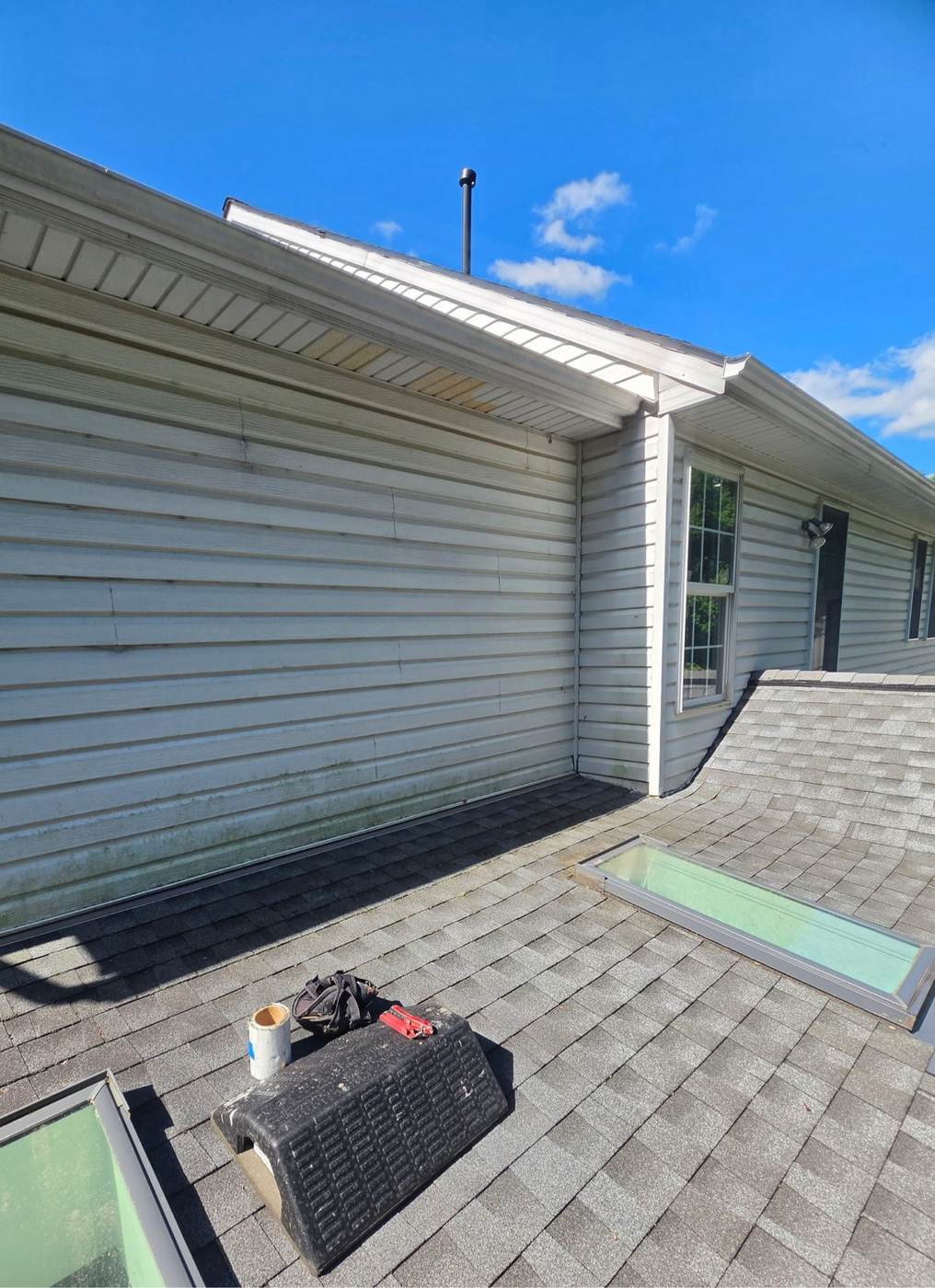
One rotted section around a chronic leak can be cut out and replaced as part of a repair. But widespread decking damage is where repair stops making sense — you can't patch a failing foundation. A full replacement with new sheathing (shown above) resets the clock on the whole system: shingles, underlayment, and deck together.
If a contractor is telling you the roof needs replacement but hasn't gone into the attic or tested the decking, get a second opinion. Decking condition should be the central evidence in a replacement recommendation, not a footnote.
How Many Layers Are Already Up There?
Maryland code — like most jurisdictions — limits residential roofs to two layers of shingles. So if your home already has two layers, a third isn't an option: any further work means a full tear-off, which makes the replacement math stronger.
Even at one layer, adding a second roof over the first deserves caution: it traps heat, adds weight, and hides problems underneath. It can make sense on a tight budget with sound decking, but it shortens the new layer's life — and when the decking needs attention anyway, tearing off is the cleaner move.
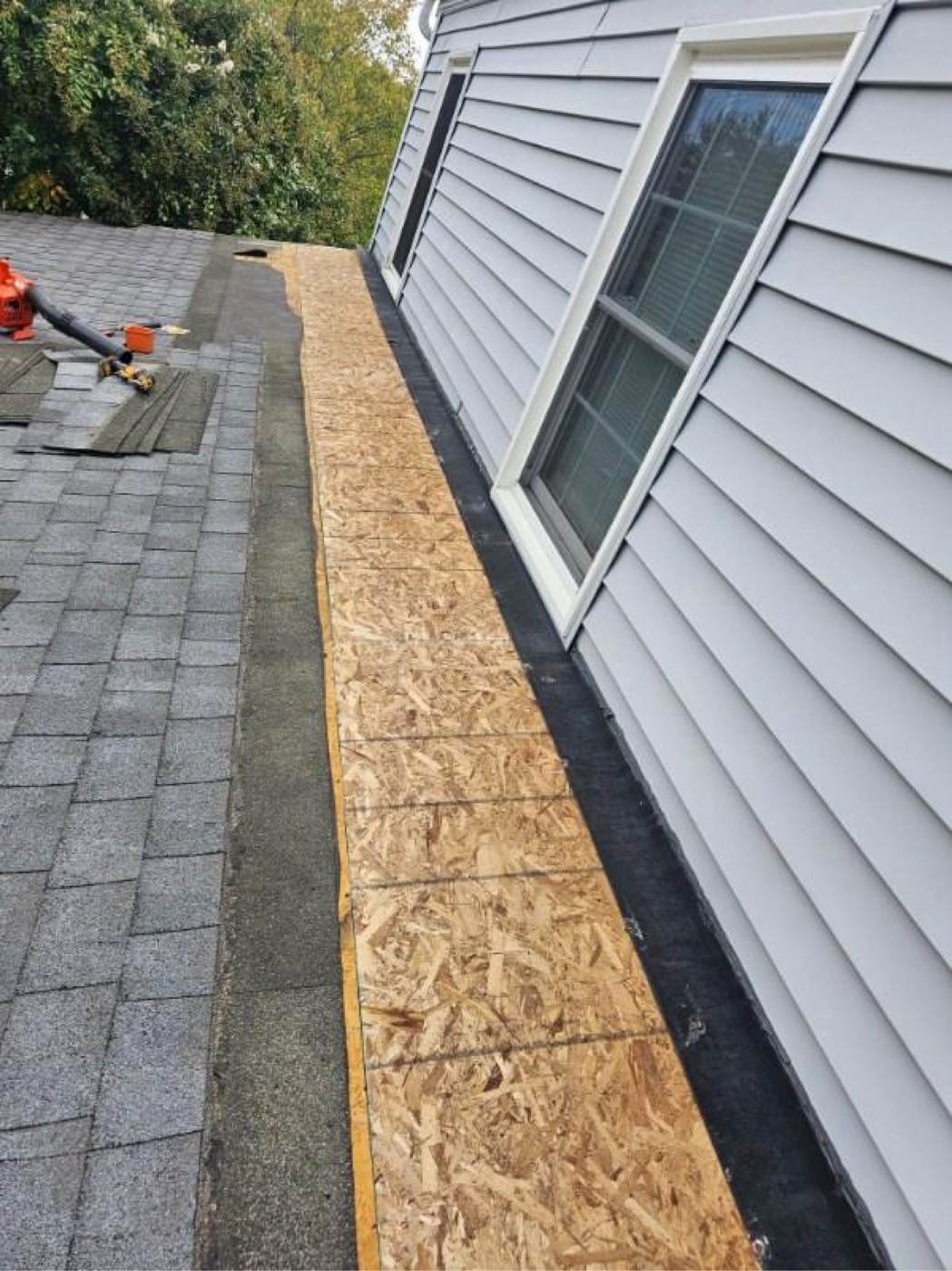
The Cost Math: The 40% Rule
This is the rule of thumb contractors use when the physical factors are genuinely borderline: if credible repair quotes pass about 40% of the cost of a full replacement, reconsider replacement.
Here's why. Say a full tear-off replacement on your home runs $12,000. A repair quoted at $3,000 is 25% — a clear repair call. A repair quoted at $5,500 is nearly 46% — you're paying almost half the cost of a new roof to keep an old one going, and that repair carries no new warranty on the overall system. In that zone, the replacement is usually the better value per year of service.
Use the real repair number — the repair that actually fixes the problem, not the cheapest patch. A $900 patch that fails in two winters isn't $900; it's $900 plus the replacement you still have to buy.
Maryland-Specific Factors
A few things about our region that shift the calculus:
Ice dams. Maryland winters produce enough freeze-thaw for ice dams at eaves, especially on north-facing slopes and under-insulated attics. Ice dams damage shingles, lift drip edge, and force water under the covering. If damage recurs in the same spots, address ventilation and
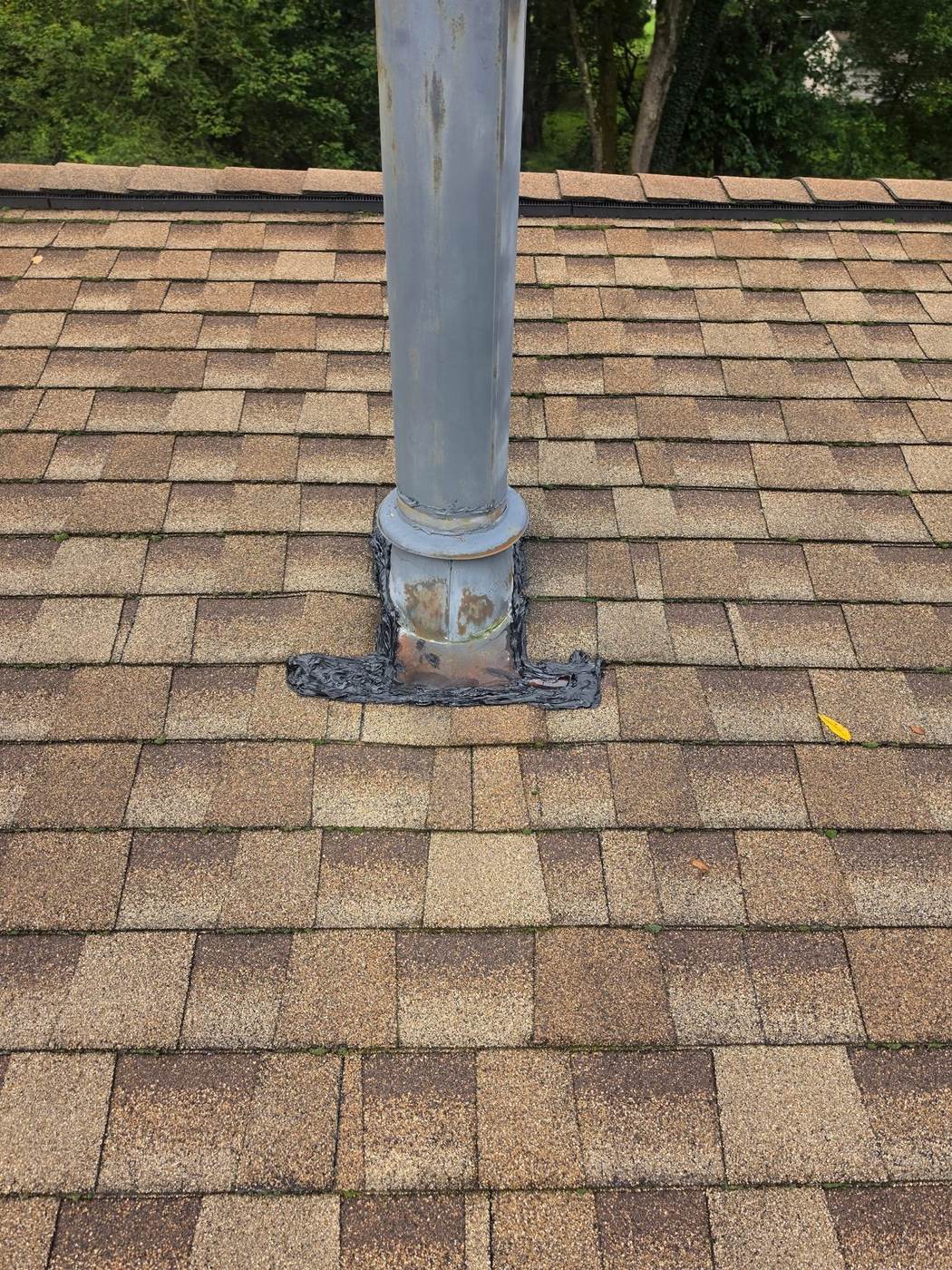
with the roof work — a replacement is the natural moment to fix ice-and-water shield at the eaves, since the roof is open anyway.
Wind and storm damage. Maryland gets enough severe weather for wind claims to be common. If damage is clearly storm-related and localized, repairs are usually the answer — and worth checking against your homeowners insurance before paying out of pocket.
Baltimore rowhouses. Most rowhouses don't have this debate at all — they have flat or low-slope roofs, which are a completely different system (see our guide to flat roof coating for rowhouses). But rowhouse rear additions and dormers often have small sloped sections where repair-vs-replace questions come up.
Tree cover. Heavily wooded Howard County lots keep shingles damp longer, accelerating granule loss and inviting moss. If your roof sits in shade most of the day, lifespan estimates skew toward the low end of the range.
When Replacement Is Clearly the Right Call
To be fair to the other side of the ledger, replacement is the right move when: the roof is past its expected life with widespread wear, the decking is compromised across large areas, there are already two layers, or the 40% math says so. A new roof also resets your warranty position — manufacturer warranties on a full system are substantially more meaningful than a repair warranty on an old one.
And sometimes replacement is the right call for non-technical reasons: you're selling the house and need the cleanest inspection outcome, or you're planning to stay for 20 years and want the problem solved once.
The Bottom Line
Most roofs don't need full replacement — but some do, and the difference is knowable. Age, damage spread, decking condition, layer count, and the cost math will point you to the right answer in most cases. Be wary of any contractor who recommends replacement without checking your attic and decking — and equally wary of one who patches a roof that can't hold a patch.
When you get an opinion on your roof, make sure it comes with the why: attic checked, decking tested, age and damage weighed. That's what separates an honest call from a sales call.