Seamless Gutters vs. Sectional: What Maryland Homeowners Should Know
Bmore Exteriors participates in affiliate programs — if you buy through our links, we may earn a commission at no extra cost to you. Learn more.
If you're pricing gutters for your home, the first question that comes up is almost always this one: seamless or sectional? It's a fair question, and the answer matters — but maybe not in the way most advertising makes it sound.
Here's the straight answer for Howard County and the Baltimore area: seamless gutters are better for your house, and it's not a close call. But sectional gutters aren't junk either — they have their place. Let's break it down the way a contractor sees it.
How Seamless Gutters Are Actually Made
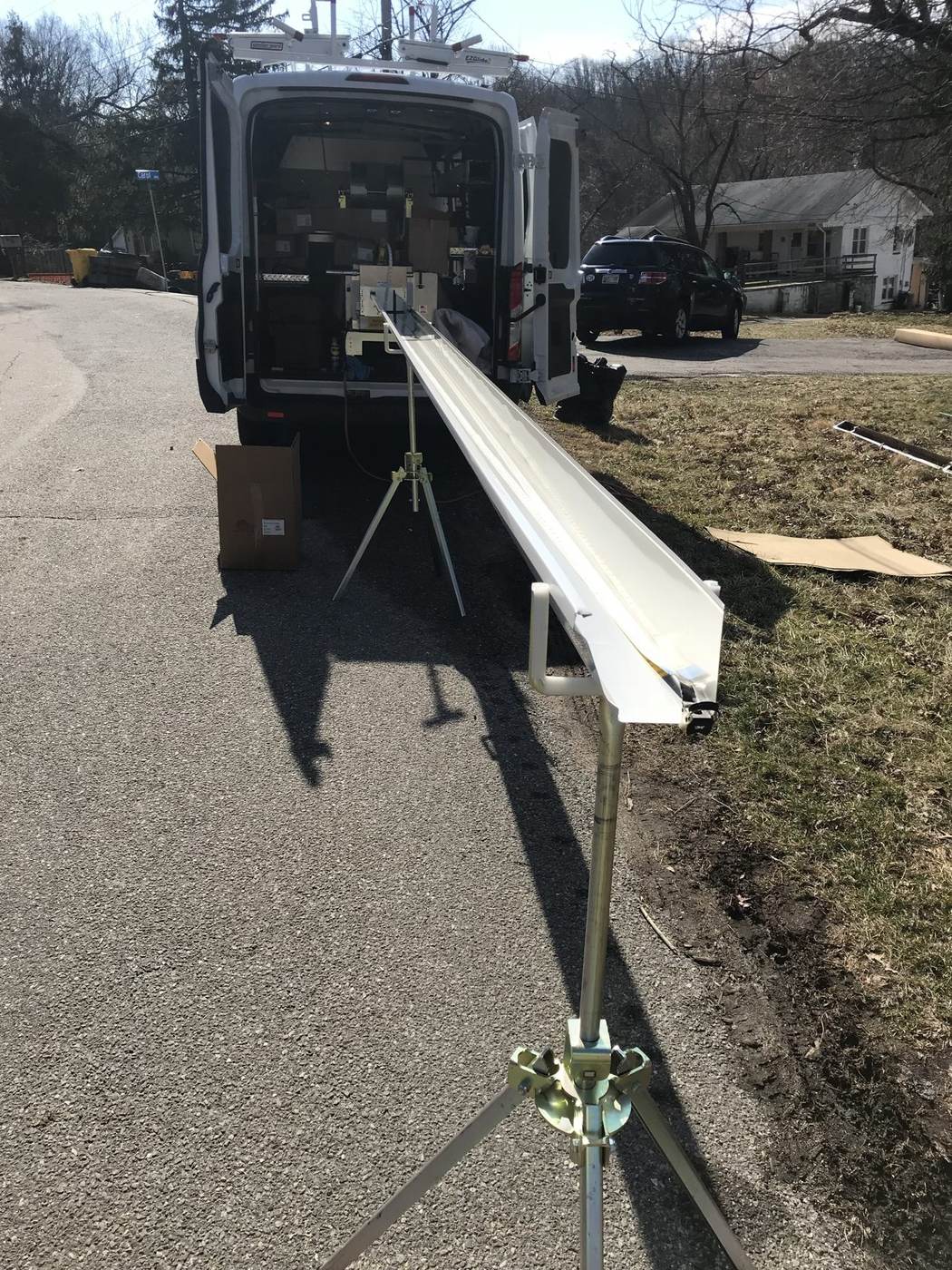
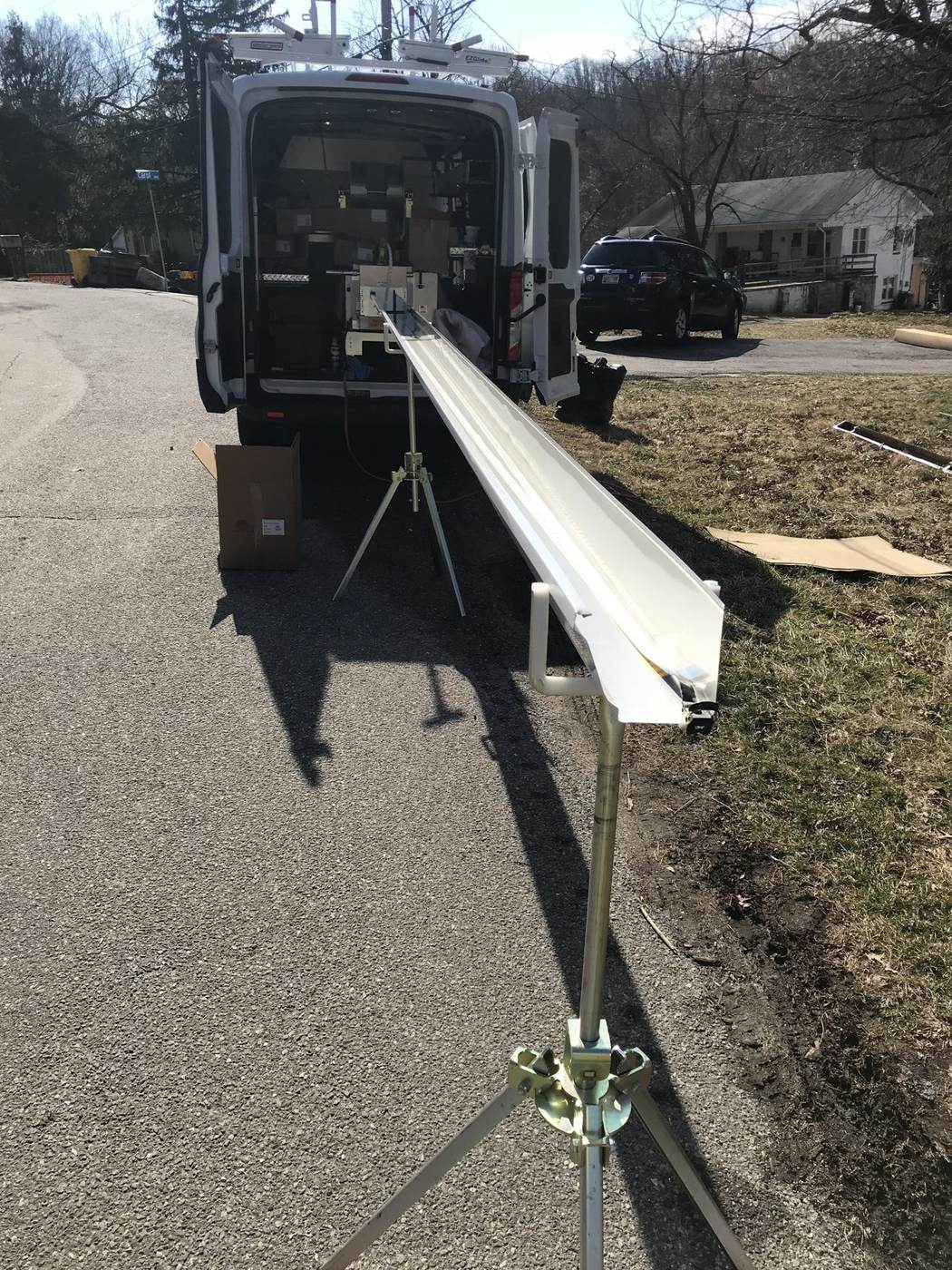
There's a bit of theater to it, honestly. A seamless gutter isn't something ordered from a warehouse in a box. It's made on your property, the day of the install, by a machine that rides on the contractor's truck.
Here's how it works: a flat coil of painted aluminum feeds into a roll-forming machine. The machine bends the coil into a gutter profile — typically the classic K-style shape — and extrudes it out the side of the van in one continuous piece. The crew cuts it to the exact length of each run on your house and hangs it.
So instead of ten-foot sections joined together every ten feet, you get a single unbroken run from one end of the house to the other. The only joints on a seamless system are at inside and outside corners (miters), where the direction changes, and at the downspout outlets.

Why Fewer Joints Means Fewer Leaks
This is the whole argument, and it's a good one. Every joint in a gutter system is a seam sealed with caulk or solder, and every seam is a future leak. Maryland's climate is especially rough on seams for one reason: freeze-thaw cycles. Winter nights below freezing, daytime thaws, rain refreezing inside the trough — that expansion and contraction works every joint, every winter, for years. A seam that was watertight in October can start dripping by March.
A 40-foot seamless run has zero joints. The same 40 feet in sectional has three or four. Multiply that across a whole house and a seamless system might have six to ten joints total, all at corners and downspouts — while a sectional system on the same house could have thirty or more.
Joints aren't just leak points, either. They're maintenance points. Sealant dries out. Fasteners loosen. On older sectional systems, this is exactly what ends up failing: nails popping along the drip edge, seams weeping at the corners, a bracket that let go two winters ago and finally gave up.

The Honest Cost Difference
Seamless costs more. In the Maryland market, expect seamless aluminum to run roughly $8–$14 per linear foot installed for standard 5-inch K-style, depending on the contractor, the house, and the market. Sectional aluminum from a home center, installed by a contractor, might land around $5–$8 per linear foot — and if you're doing it yourself, the materials are only a couple dollars a foot.
So on a typical home needing 150–200 linear feet, you're looking at maybe $500–$1,500 more for seamless over a professionally installed sectional system. For a component that protects your foundation, siding, and basement for 20+ years, that's one of the better values in home improvement. Said plainly: if it's your primary home and you plan to stay, seamless pays for itself in avoided repairs.
When Sectional Is Fine
Not every gutter run needs to be seamless. Sectional has a legitimate place:
- Sheds, detached garages, and outbuildings. Short runs, easy access, low stakes. Sectional is perfect here.
- DIY projects. If you're handy and the run is short and low, a weekend sectional install is genuinely doable. Product recommendationgutter sealant / end caps / hangers Affiliate link placeholder — real link added later.
- A single short run you need replaced fast. If one 12-foot section of garage gutter failed and the rest of the house is fine, matching it with sectional is reasonable.
- Rental properties on a tight budget, where the calculus is different.
gutter sealant / end caps / hangers
Affiliate link placeholder — real link added later.Just go in with eyes open: sectional needs its seams checked and resealed every few years, especially after hard winters. That's not a flaw — it's just the maintenance the price difference buys you out of with seamless.
Aluminum Is the Maryland Standard
Seamless gutters in Maryland are aluminum, full stop. Copper exists and looks great on the right house, but at three to four times the price of aluminum, it's a specialty choice. Steel gutters used to be common but rust killed them in this climate — aluminum doesn't rust, which is what you want with all the rain and freeze-thaw we get.
Standard residential aluminum is .027 gauge. Some contractors offer .032 gauge (heavier) for a modest upcharge — thicker metal resists denting from ladders and holds its shape better under ice and heavy leaf loads. On a Maryland home with mature trees, the heavier gauge is worth asking about.
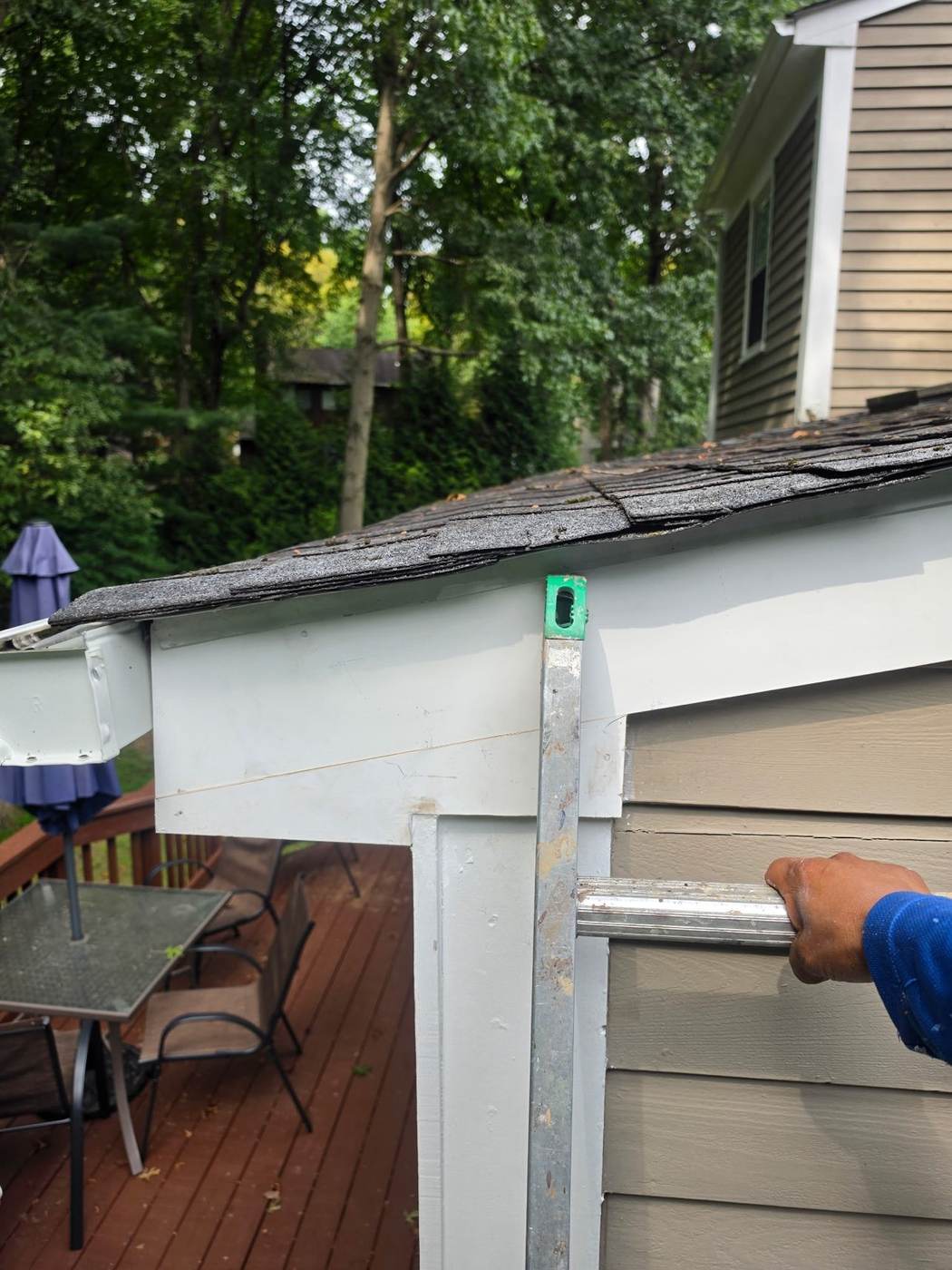
ladder stabilizer / standoff to protect gutters
Affiliate link placeholder — real link added later.5-Inch vs. 6-Inch: Sizing That Actually Matters
Most Maryland homes have 5-inch K-style gutters. They handle the typical colonial or cape cod roof fine. But 6-inch gutters are having a well-deserved moment, and here's why:
- 6-inch gutters carry roughly 40% more water than 5-inch. On steep roofs, large roof planes, or homes where two roof sections dump into one run, that capacity matters during our heavy summer storms.
- 6-inch pairs with 3x4-inch downspouts instead of the standard 2x3. That combo moves water noticeably faster and clogs less, since leaves and debris pass through the larger opening more easily.
- The upcharge is modest — typically $1–$2 more per linear foot installed.
Our rule of thumb: if your roof has long runs, steep pitches, or valleys concentrating water into one spot, step up to 6-inch. For a small ranch with straightforward roof lines, 5-inch does the job. When in doubt, a contractor can size it by roof area — it's a real calculation, not a guess.
Colors and Hardware
Aluminum gutters come in 20+ factory-baked colors. White is the default and the cheapest, but matching your trim color costs little or nothing extra from most installers — it's the same coil stock, just a different color. Pick what matches the house; you'll look at these for 20 years.
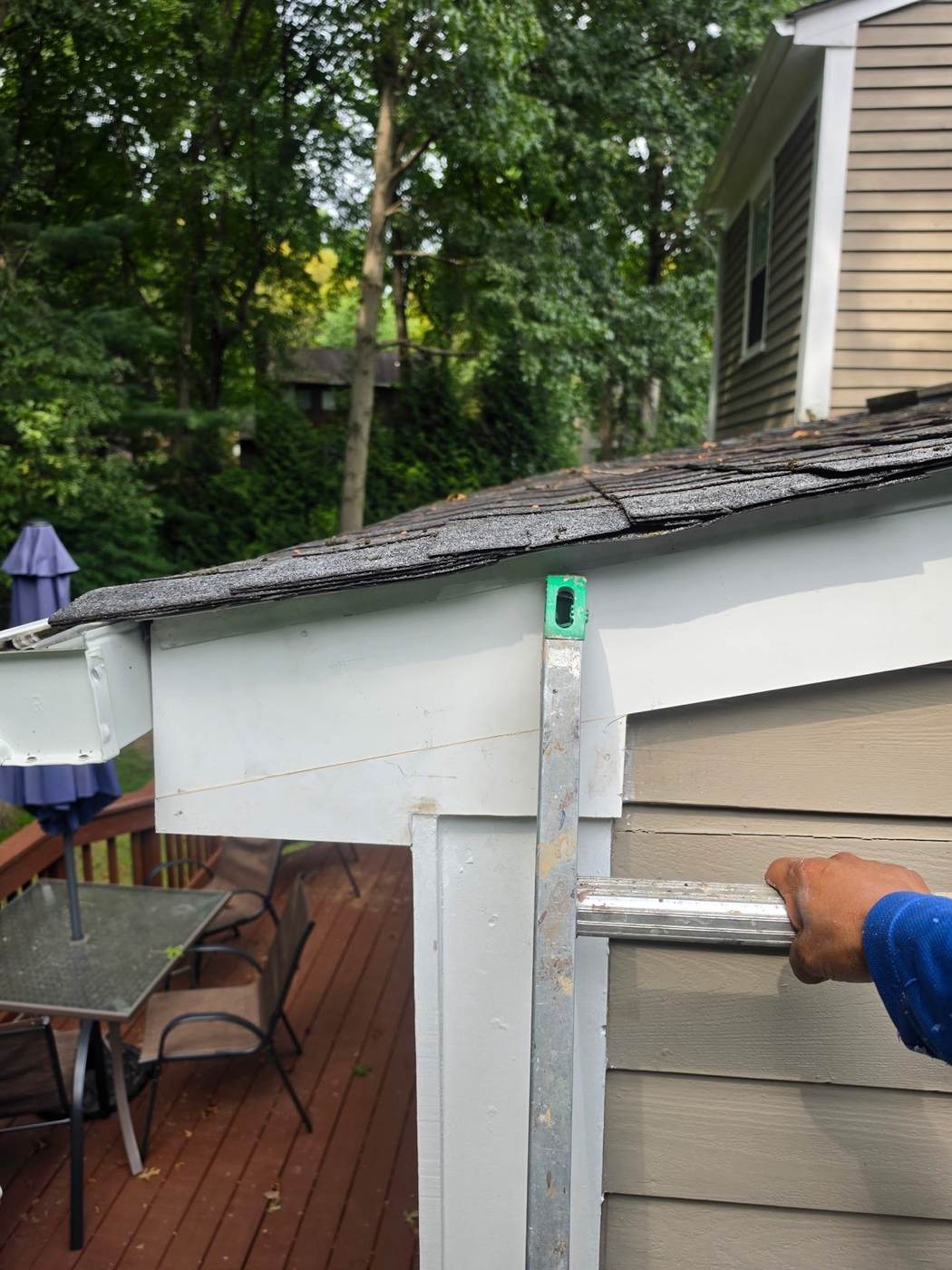
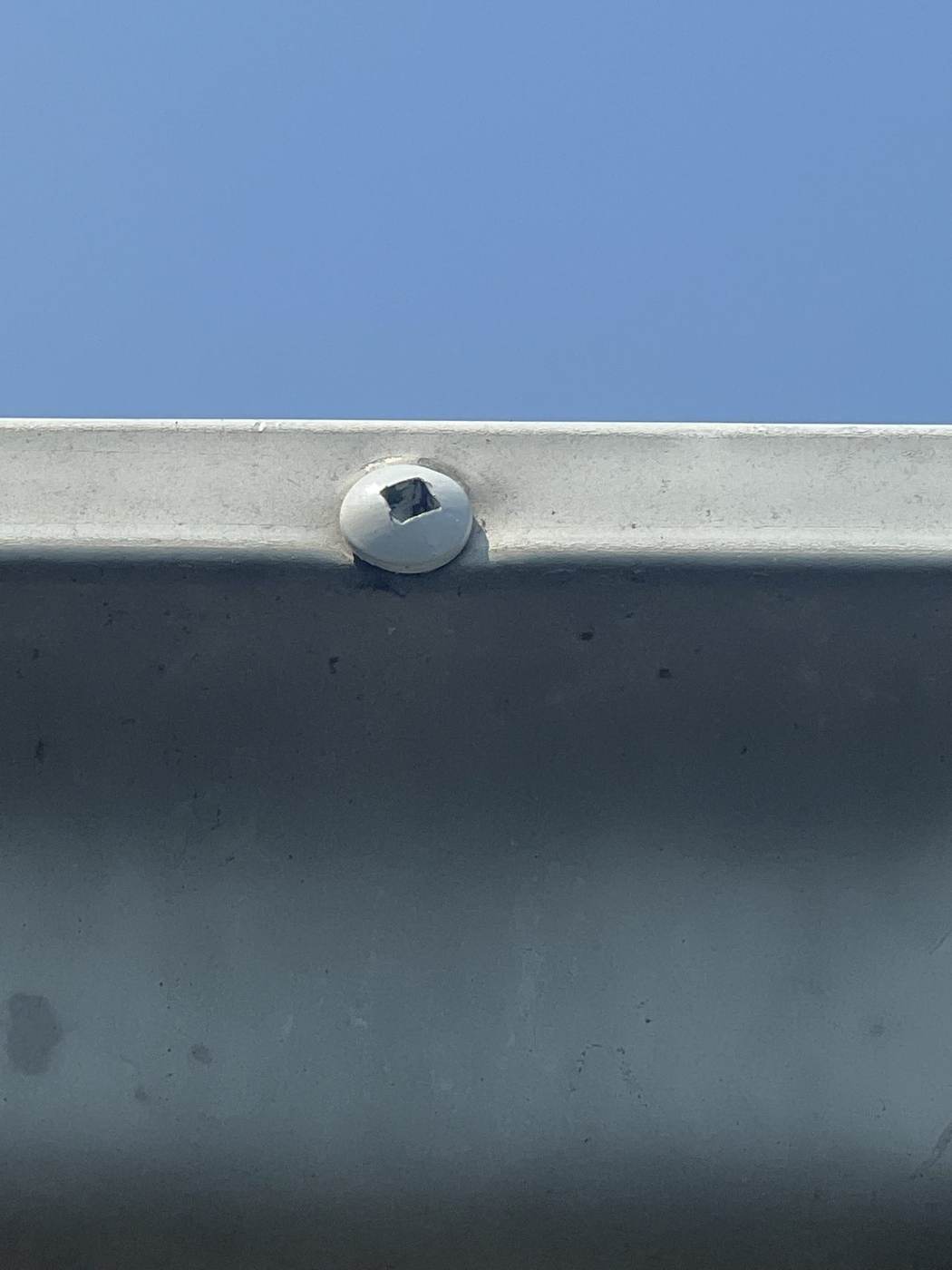
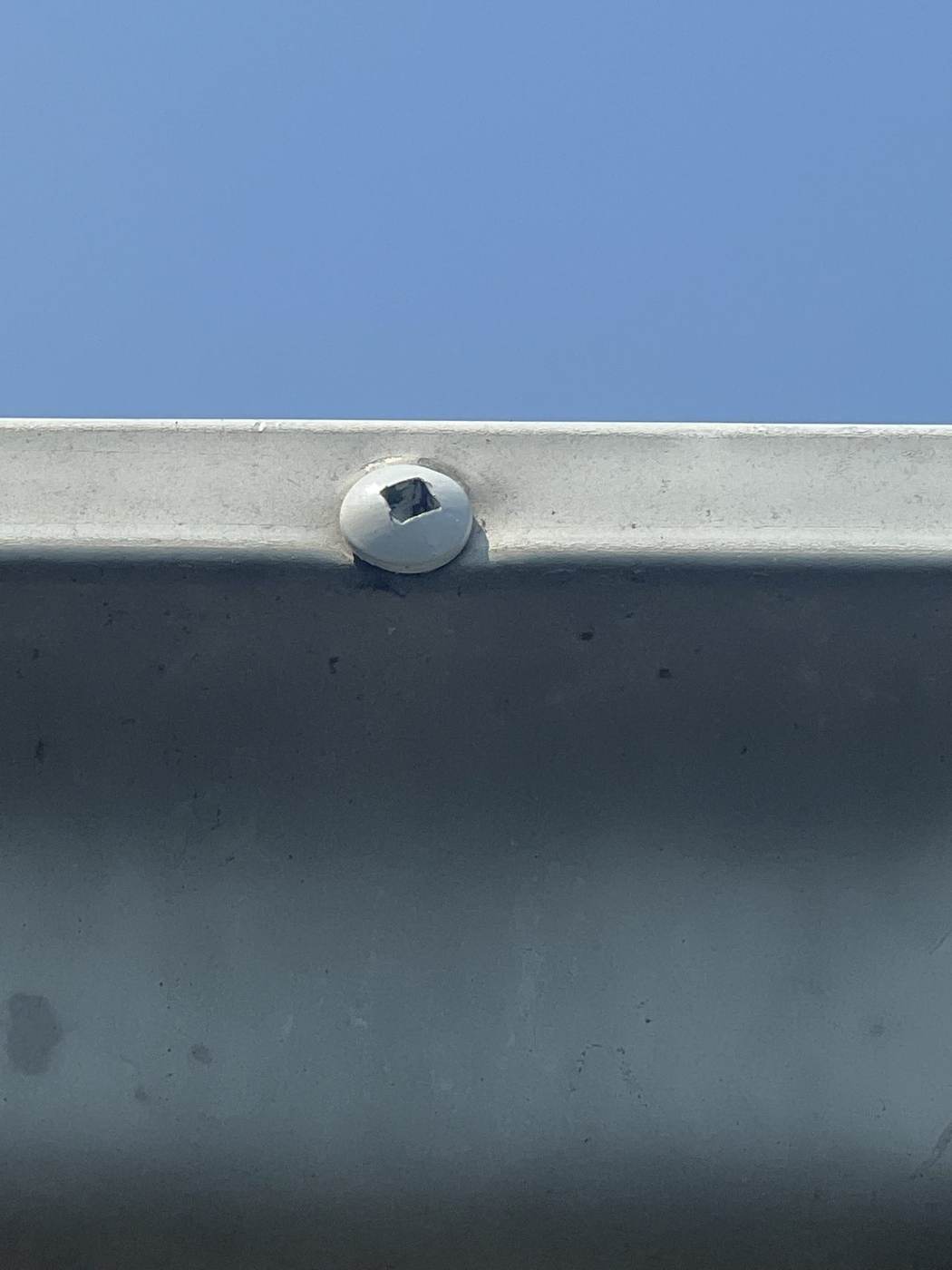
One more thing worth knowing: how the gutter is hung matters as much as what it's made of. Old spike-and-ferrule hangers — long nails driven through the gutter into the fascia — work loose over time (that's the popping you see in the photo above). Modern installations use hidden hangers screwed into the fascia, which hold far better through freeze-thaw cycles. If you're getting a quote, ask what hangers are included. If a contractor is still spiking gutters in 2026, get another quote.
The Bottom Line
For your home: go seamless, go aluminum, use screwed hidden hangers, and consider 6-inch if your roof is big or steep. For the shed: sectional from the home center is fine.
Gutters are one of those things that either work quietly for decades or cost you a little bit of money and attention every single year. Spending a bit more upfront buys you the quiet version.
The bottom line: measure your runs, decide 5-inch vs. 6-inch for your roof area, and get the per-foot price in writing — a straight, itemized quote makes the seamless premium easy to judge.