Gutter Guards: Do They Actually Work?
Bmore Exteriors participates in affiliate programs — if you buy through our links, we may earn a commission at no extra cost to you. Learn more.
Short answer: gutter guards work — at what they're designed to do. They don't do what the sales pitches claim. This guide is the unvarnished version: which types are worth the money, which aren't, and how to tell whether your house is a good candidate in the first place.

The four types, ranked by what we actually install
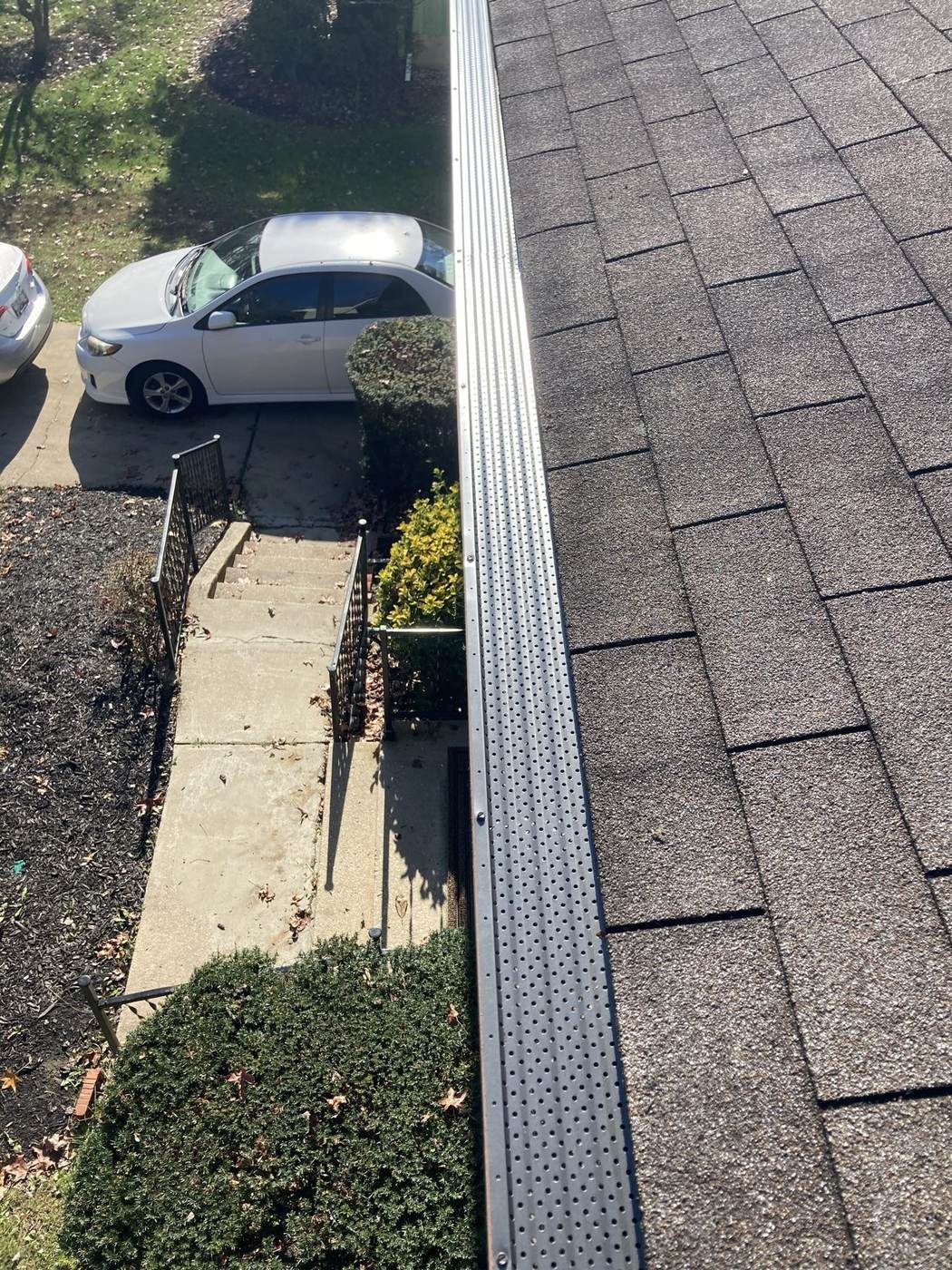
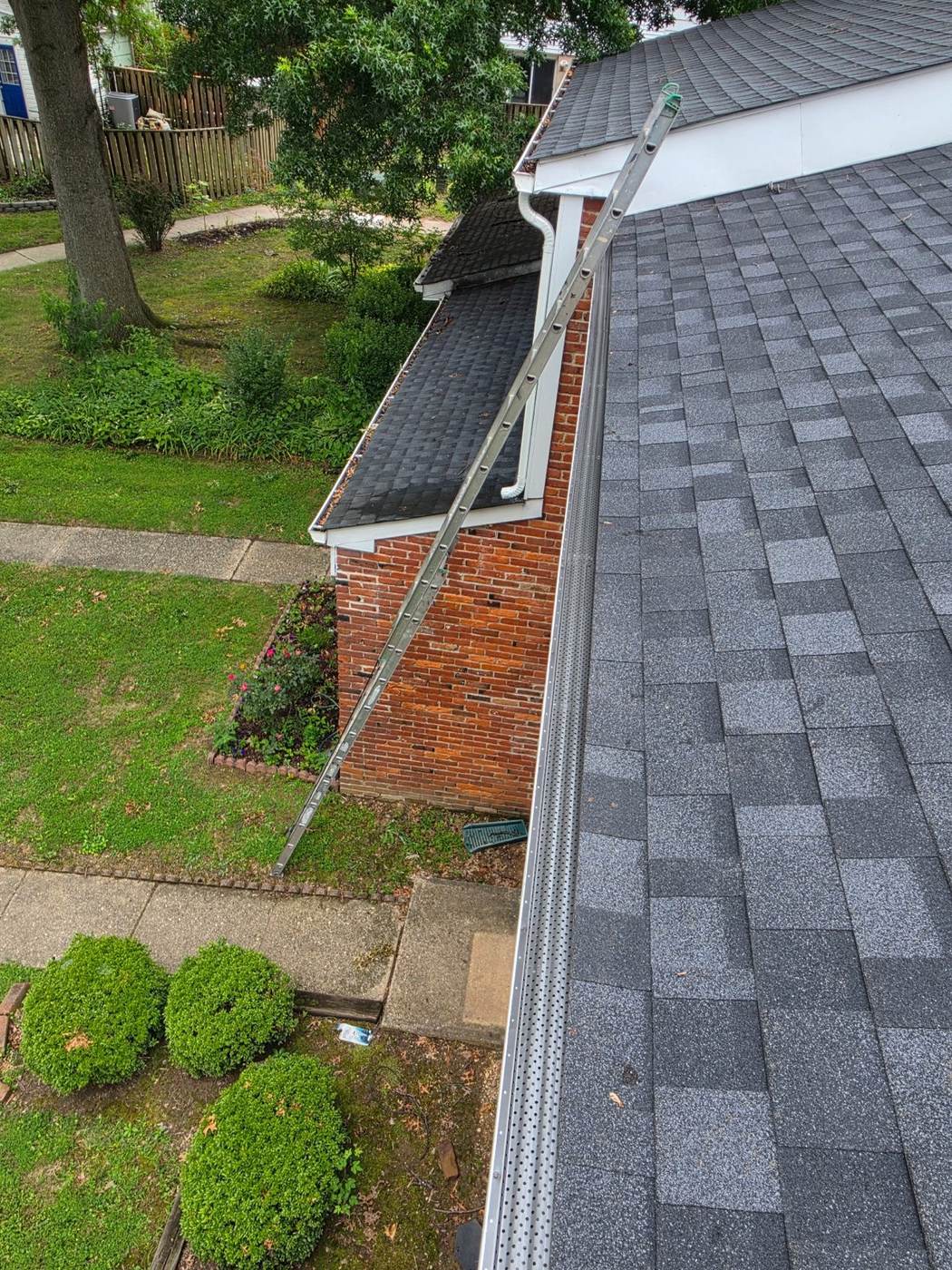
Perforated metal / mesh screens. Aluminum or steel panels with holes, slipped under the shingles and snapped onto the gutter lip. This is the style installed most often around here, and for good reason: they shed leaves and the big stuff, they last 10–15+ years, they don't interfere with roof shingles, and they come off with a few screws for cleaning access. Cost ballpark: $7–$12 per linear foot professionally installed.
Micro-mesh. A finer stainless-steel mesh layered on a frame — the premium option. Handles smaller debris like maple helicopters and locust pods better than standard perforated guards. Costs more ($12–$20 per foot installed) and can be overkill unless your roof sits under heavy small-debris trees. In our experience it's the best performer but not always the best value.
Brush inserts. Bottle-brush-style cylinders that sit inside the gutter. Cheap ($3–$5 per foot) and easy for a homeowner to install. The catch: they trap needles and small debris in the bristles, and when they clog, they're worse than an open gutter — you can't just blow them off, you have to pull the whole brush out and shake it down. They're a poor pick for homes surrounded by pine.
Foam inserts. Foam wedges that fill the gutter trough and let water filter through. Similar price to brushes, similar problem: after a few seasons the foam breaks down, loads up with shingle grit, and becomes a soggy mat. It also tends to void the aesthetic the first time it rains hard and water sheets over it. Skip them.
What guards do well
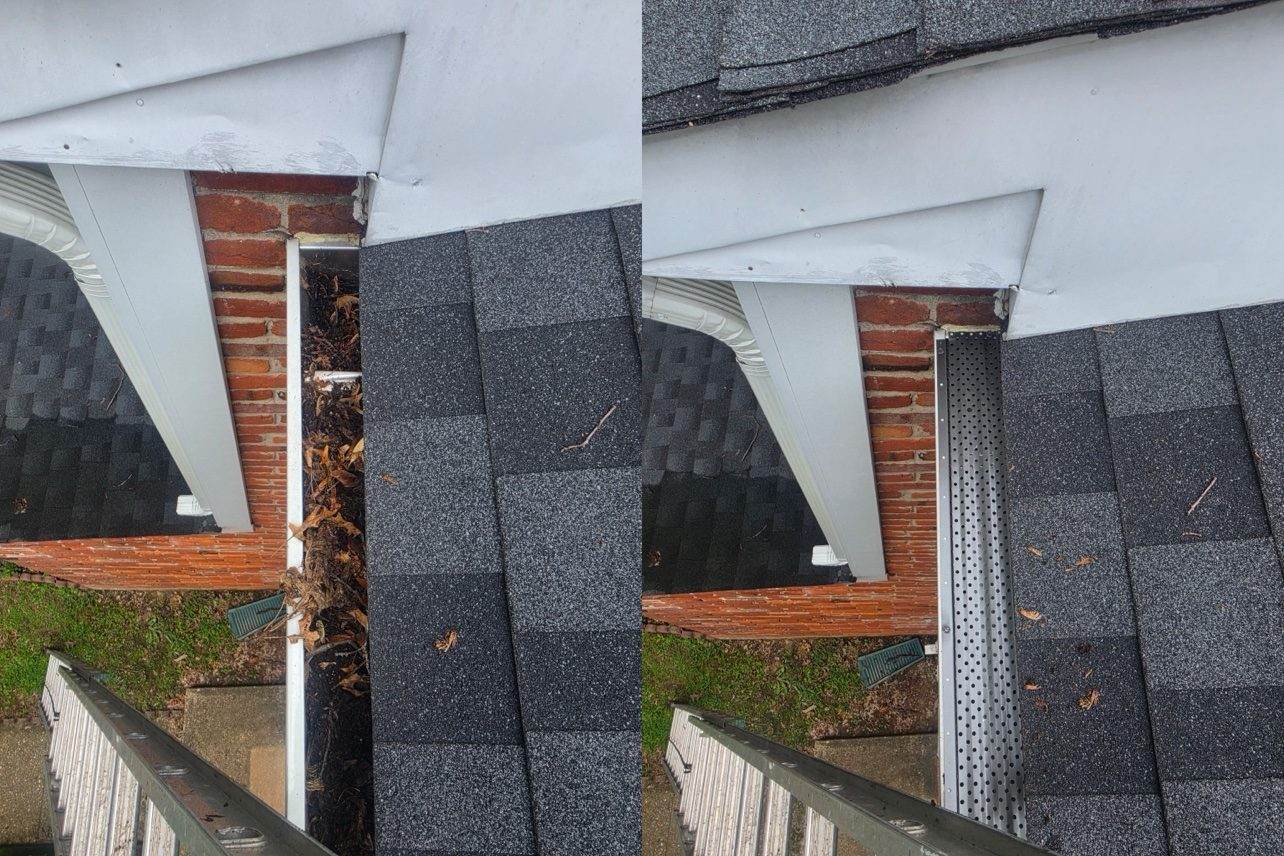
Here's the honest pro list. Guards excel at keeping the big stuff out of the trough: full leaves from oaks and maples, twigs, seed pods, tennis balls. On a wooded lot in Howard County, an unprotected gutter can pack solid in a single October. Guards turn that into a surface-cleaning job — debris sits on top and most of it dries, blows, or rinses off. That's the entire point: you trade a mucked-out gutter for a quick top-down rinse, and your gutters actually drain in a storm.
They also pay off in ways nobody mentions: fewer ladder trips for the homeowner, less weight stress on the gutter hangers, and in winter, a clean gutter is less likely to turn into a solid block of ice pulling away from the fascia. A 5-inch K-style gutter holds about 1.2 gallons of water per foot — that weight adds up fast when it's ice.
What they don't fix — the honest limits
Pine needles. The number-one complaint. Needles slide into perforated holes, wedge in mesh, and bridge across gaps. Micro-mesh handles them best, but no guard is maintenance-free under white pines. If your house is ringed with pines, expect to brush the tops off twice a year.
Shingle grit. Asphalt roofs shed granules — that's normal. The grit washes off the roof, lands on the guard, and filters through into the trough, where it settles into a concrete-like sludge. Guards don't stop it. Every gutter system, guarded or not, benefits from a full flush-out every few years.
Maple helicopters. Those spinning seeds are the perfect size to wedge nose-first into perforations and stay there. Micro-mesh resists them better, but on a heavy maple year you'll still be picking some off.
Ice dams. Guards don't cause ice dams, but they don't prevent them either. Ice dams are a ventilation and insulation problem in the attic — warm air melting snow from below, refreezing at the cold eave. If you've got ice dams, your money goes into attic air sealing and insulation long before gutter guards. Putting heated
heat cable
Affiliate link placeholder — real link added later.on the guard is a patch, not a cure.
Squirrels and determined critters. A motivated squirrel will chew through a plastic guard and nest under a metal one. Guards are debris management, not wildlife exclusion.
What they actually cost
Real numbers for a typical single-family home (roughly 150–200 linear feet of gutter):
- DIY screen kits from the hardware store: $1–$3 per foot for materials ( Product recommendationsnap-on gutter guard kit Affiliate link placeholder — real link added later.). Budget a weekend on a ladder. Works fine on a one-story ranch; think twice on a steep two-story.
- Professionally installed perforated metal: $1,050–$2,400 for the typical home.
- Micro-mesh installed: $1,800–$4,000.
snap-on gutter guard kit
Affiliate link placeholder — real link added later.Compare that to gutter cleaning, which runs $150–$300 per visit around here, and most wooded lots need it twice a year. At $500 a year in cleaning, a mid-range installed system pays for itself in about three to five years — and that's before you count the cleanings you'd skip, the fascia damage you'd avoid, and the Saturday mornings on a ladder you don't spend.
When they're worth it (and when they're not)
Worth it: your lot is wooded (Howard County lots with mature oak, maple, or tulip poplar are the textbook case), you're cleaning gutters twice a year or more, or the house is two-plus stories and ladder work is genuinely risky. Also worth it: any home where clogged gutters have already caused a problem — water behind the fascia, a flooded basement window well, eroded mulch beds. That's the guard paying for itself in damage prevention.
Not worth it: a clear lot with no trees within a stone's throw. Houses on open lots get sold guard systems they will never need — the gutters would only collect shingle grit. Also think twice if your gutters are undersized, sagging, or pitched wrong. Guards don't fix a drainage problem; putting a $2,000 guard on a gutter that overflows in a moderate rain is lipstick on a pig. Fix the gutter first — re-pitch, upsize to 6-inch, and step up from 3×2 to 3×4 downspouts if you're getting washout.
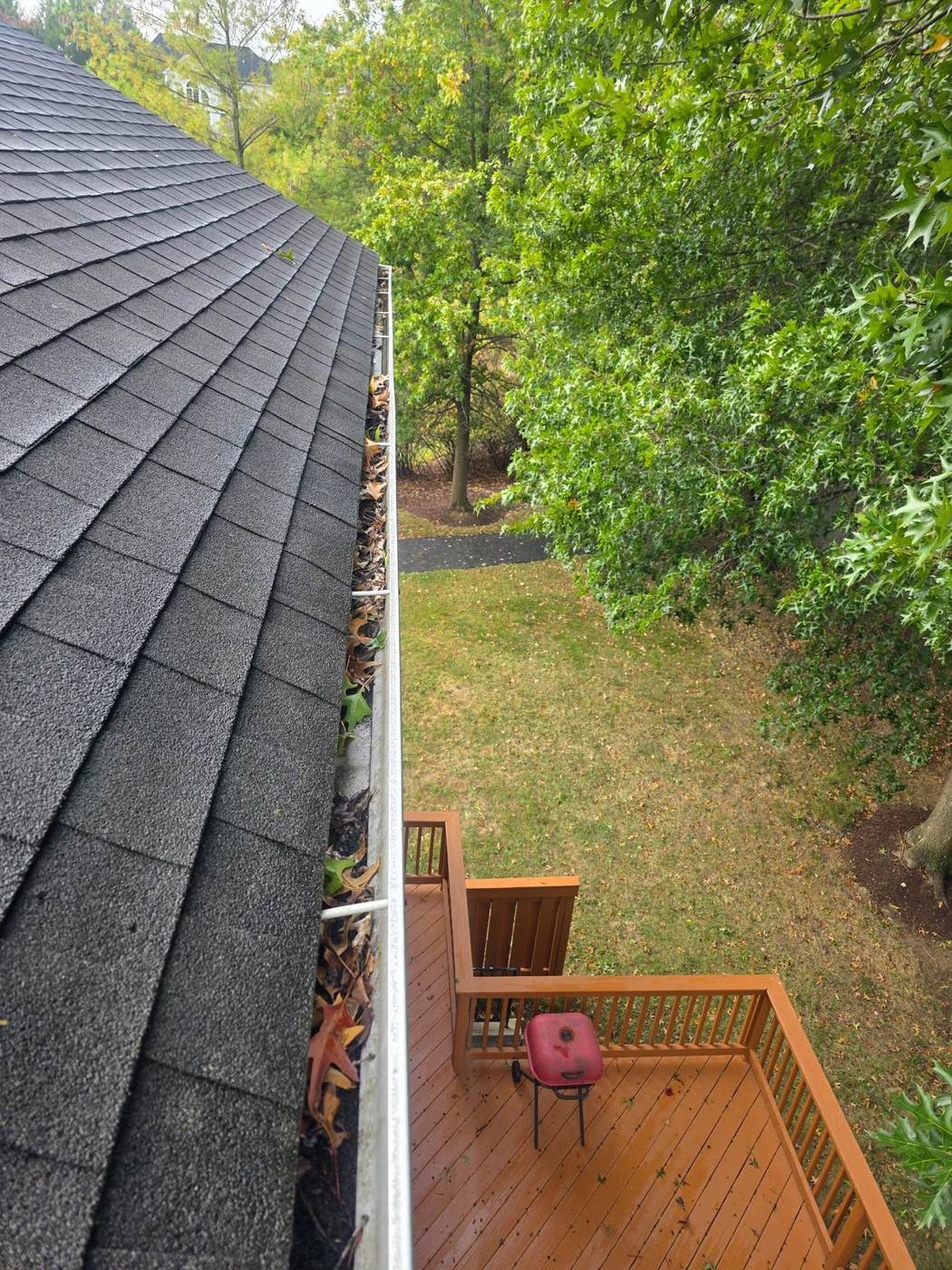
One more honest note: guards are not a "never touch them again" product. Plan on a yearly check — hose the tops off, make sure no section lifted in a storm, peek at the downspout outlets. Ten minutes, once a year.
The bottom line
Gutter guards are good engineering applied to a real problem: they keep the big debris out and cut your maintenance dramatically. They're not magic, they're not maintenance-free, and they're not the right call for every house. But on a wooded Maryland lot, they're one of the best home-maintenance investments out there — because the alternative isn't "no gutters guards," it's a packed gutter, an overflowing eave, and water going somewhere you don't want it.
The deciding factors are your trees, your roof pitch, and how risky the ladder work is at your house. Match the guard to the home — or skip guards entirely if your lot is clear — and you'll get the honest version of the result.