Deck Restoration Guides for Maryland Homeowners
A gray, splintery deck is usually a restoration candidate, not a demolition job. These guides cover what deck restoration actually involves, what it costs in Maryland, and how to judge whether your deck's structure is still sound.
- Restoration vs. replacement, honestly
- Washing, brightening, and staining, step by step
- Board and railing repairs
- Maryland costs, line by line
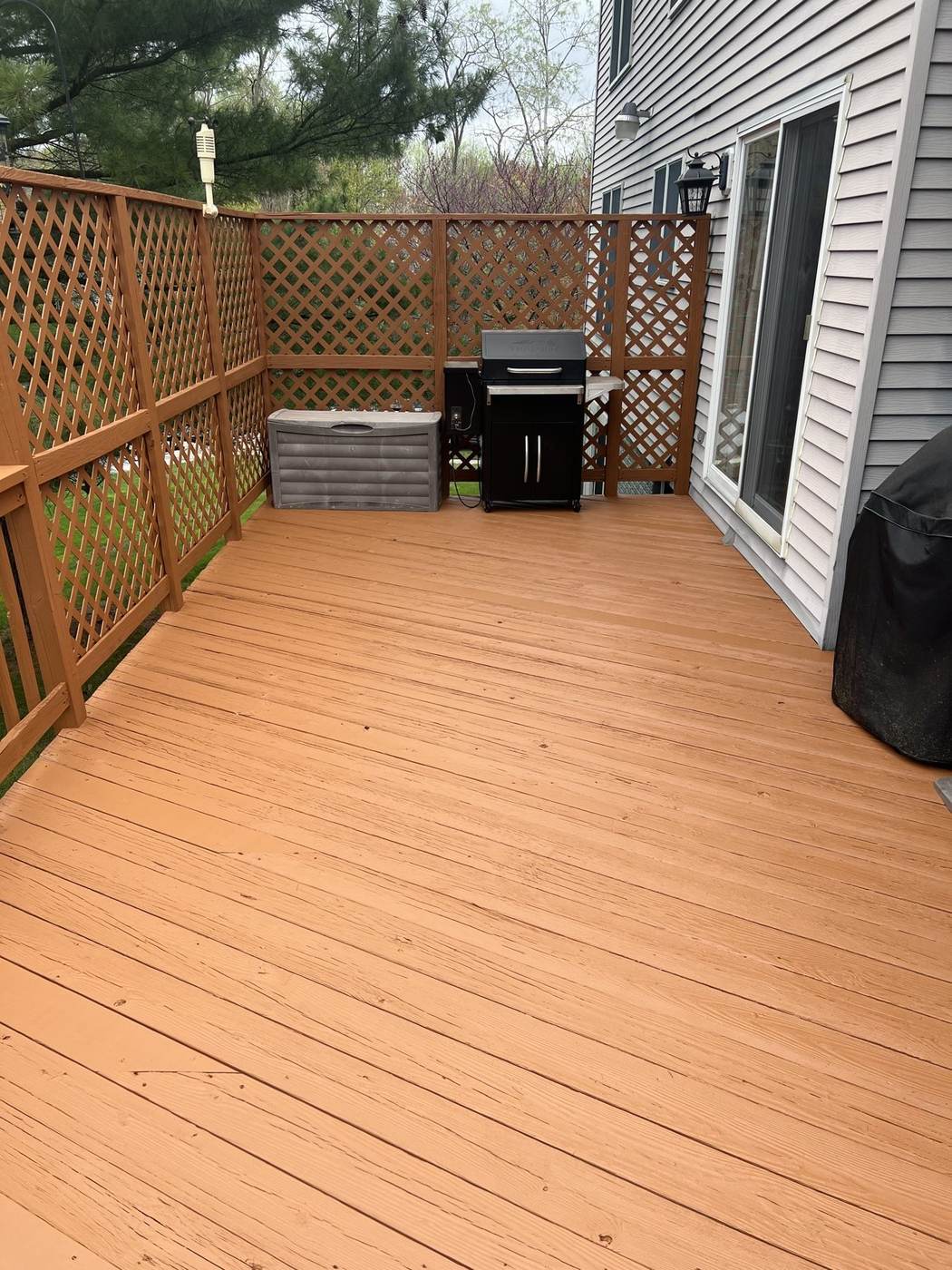
Decks take the worst of Maryland's weather — summer humidity, winter freeze-thaw, and shade that never quite dries out. The guides here draw on real restoration work on Maryland decks, so the timelines, products, and prices reflect how decks actually age in this climate.
Deck Restoration guides
How Much Does Deck Restoration Cost in Maryland?
Real deck restoration prices in Maryland: line-item breakdowns for washing, sanding, staining, board replacement, and railings — plus a 300 sq ft example budget.
Read the guide →Deck Restoration vs. Deck Replacement: An Honest Breakdown
When is it smarter to restore your deck vs. replace it? An honest framework: what restoration includes, when rot means replacement, and typical cost ranges.
Read the guide →Frequently Asked Questions
How long does a deck restoration last?
The structural parts of a restoration — replaced boards, rebuilt railings, tightened framing — last as long as the materials do, typically decades for pressure-treated lumber. The finish is the maintenance item: a quality semi-transparent stain on a well-prepped deck generally lasts 2 to 3 years on the flat decking surface and longer on railings and vertical boards, which see less sun and foot traffic. Decks in full sun or under heavy tree cover land at the short end of that range.
Can individual rotten deck boards be replaced?
Yes — board-by-board replacement is one of the most cost-effective deck repairs there is, as long as the framing underneath is sound. A contractor will lift the bad boards, inspect the joists they sat on, and sister or treat any framing that's starting to soften. New pressure-treated boards will look noticeably lighter than the weathered deck around them at first; they gray out and blend over a season, and a full wash-and-stain after replacement evens the color further. What you can't do is deck over joists that are themselves rotten — boards are cosmetic, joists are structural.
How often should a deck be stained in Maryland?
Plan on every 2 to 3 years for a penetrating semi-transparent stain in Maryland's climate, and every year or two for a simple clear sealer, which offers less UV protection. The water test beats the calendar: sprinkle water on the decking — if it soaks in instead of beading, the finish is done and the wood is drinking water directly. Staining on schedule is far cheaper than the alternative cycle of neglect, graying, and split boards that turns maintenance into restoration.
Is pressure washing bad for a wood deck?
It can be. Too much pressure — or holding the wand too close — furs the wood grain, leaving a fuzzy surface that splinters and drinks stain unevenly. The safer approach is a deck cleaner and brightener with low-pressure rinsing, reserving real pressure for stubborn mildew in small areas. After washing, the deck needs to dry thoroughly — typically 48 to 72 hours of dry weather — before staining. Stain applied over damp wood is the single most common reason fresh deck finishes peel within a year.
What's the difference between deck stain and deck sealer?
A sealer is a clear water repellent: it slows water absorption but offers little UV protection, so the wood still grays, and it needs reapplying roughly yearly. A stain combines pigment with the protective finish — the pigment is what blocks the UV that breaks wood down, which is why stains outlast sealers. Semi-transparent stains show the grain while adding color and typically give the best balance of looks and longevity on Maryland decks. Solid stains last longest of all but look more like paint and can peel.
When is a deck beyond restoring?
Restoration can't fix structure. The red flags are rot in the ledger board that attaches the deck to the house, joists soft enough to dent with a screwdriver, posts rotting at ground level, and a frame that bounces or has pulled away from the house. Surface problems — gray wood, mildew, splinters, a few rotten boards, wobbly railings — are all restoration territory. If the bones test sound with a screwdriver and an under-deck look, restoration is almost always the smarter money.
Questions or a Topic Idea?
Email us — reader questions shape the guides we publish next.
[email protected] Browse the Guides