How Much Does Roof Repair Cost in Maryland?
Bmore Exteriors participates in affiliate programs — if you buy through our links, we may earn a commission at no extra cost to you. Learn more.
"How much does a roof repair cost?" is probably the most common question Maryland homeowners ask, and the honest answer is: it depends — but it depends on knowable things. After years of working roofs in Howard County and the Baltimore area, here are the real ballpark numbers for the repairs that come up most often, plus the cost drivers that move any job up or down.
The short version: most roof repairs in Maryland land between $300 and $2,500. Single-penetration fixes sit at the low end; multi-area repairs with new flashing and shingle work land at the high end. Everything below is a ballpark — your roof's specifics set the final number — but these ranges reflect what Maryland homeowners actually pay.
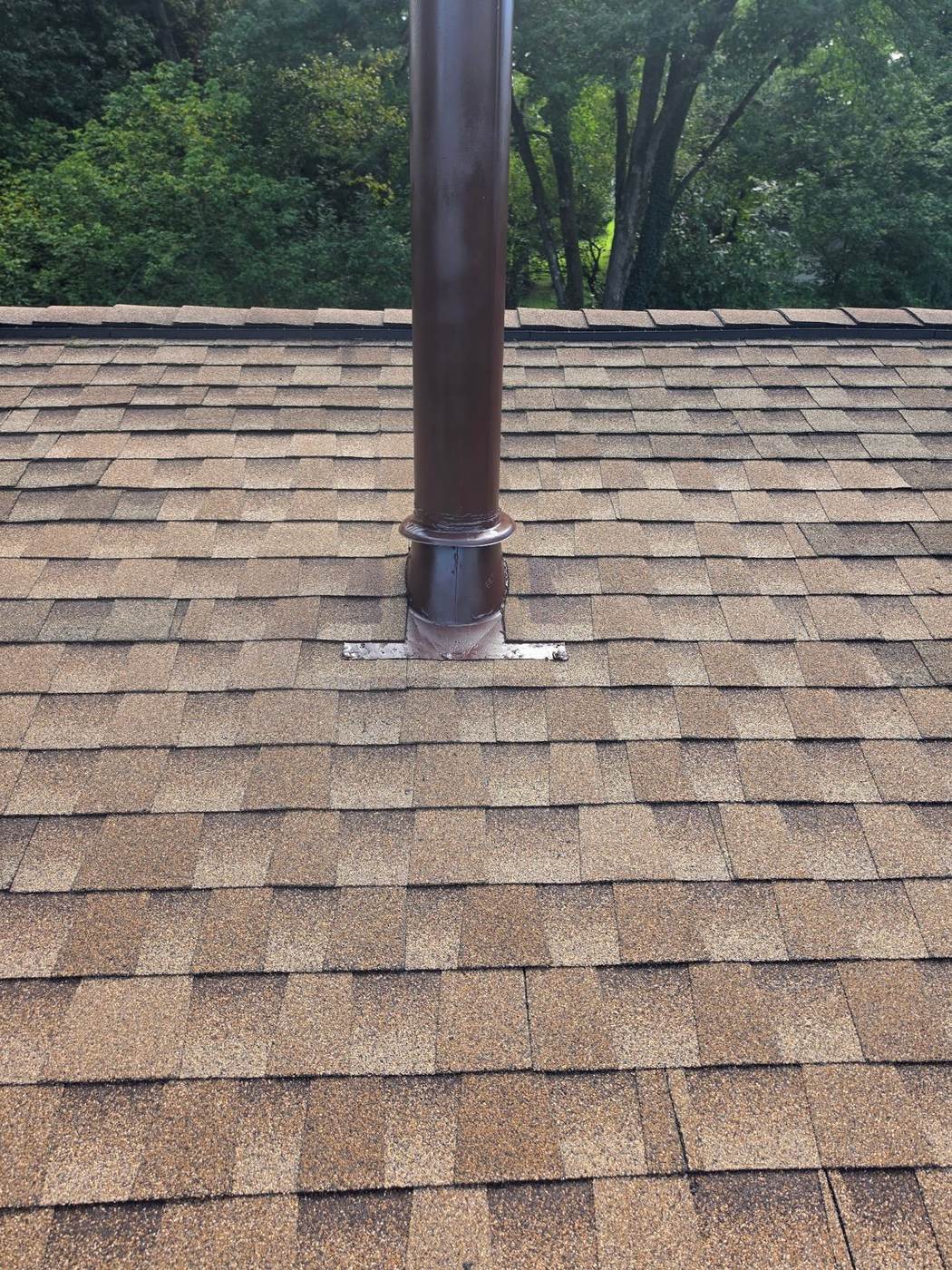
Common Repair: Pipe Boot / Vent Flashing Replacement — $300–$600
The single most common roof repair on Maryland homes is a leak around a plumbing vent pipe. The rubber boot that seals the pipe to the roof dries out, cracks, and splits — usually after 8 to 12 years of Maryland sun and temperature swings. Water tracks down the pipe into the attic, and homeowners discover a stain on a ceiling.
This is a straightforward fix: remove the shingles around the pipe, install a new boot (or a lead boot, which lasts much longer), and re-shingle the area. The material cost is small — the price is mostly labor and the crew getting on the roof. Typical range: $300–$600 per pipe, with most single-pipe jobs landing near the middle.
One note: if you have three or four pipes showing their age, it's often cheaper per unit to do them all in one visit than to pay for repeat visits one at a time. A crew on the roof is a crew on the roof.
Ridge Vent and Ridge Cap Repair — $400–$900
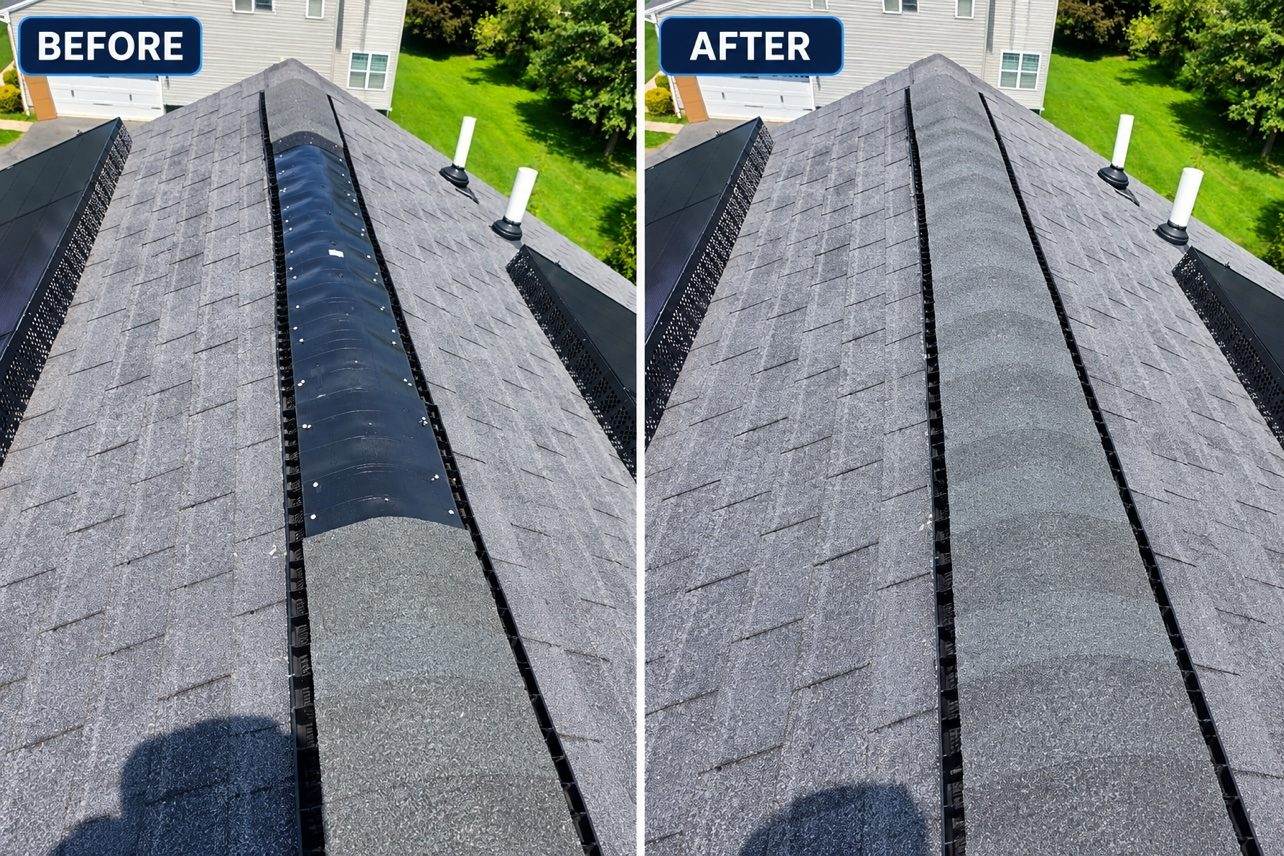
Wind loves ridge caps. The shingles at the very peak of the roof take the most weather, and after a good storm it's common to see ridge caps cracked, lifted, or missing entirely. On older roofs the ridge vent itself can fail — cracked plastic vents, or shingle-over vents with blown-off cap shingles.
A ridge cap repair usually means replacing a run of cap shingles along the peak, sometimes with a section of the ridge vent replaced at the same time. Typical range: $400–$900, depending on how long the ridge is and whether the vent itself needs work.
Shingle Patching (Storm / Wind Damage) — $300–$800
A windstorm pulls a patch of shingles off one slope, or a falling branch punches through a section. The repair is to remove the damaged shingles, replace the underlayment underneath if needed, and weave in new shingles.
The big variable here is matching. On a roof under about 10 years old, new shingles usually blend in reasonably well. On older roofs, the new shingles will look noticeably different — same product, but 12 years of sun fading separates them. Some homeowners don't mind; some do. It's worth discussing before the work starts.
Typical range: $300–$800 for a small patch (a few square feet up to one bundle of shingles' worth). Larger patches that need multiple squares of shingles climb from there.
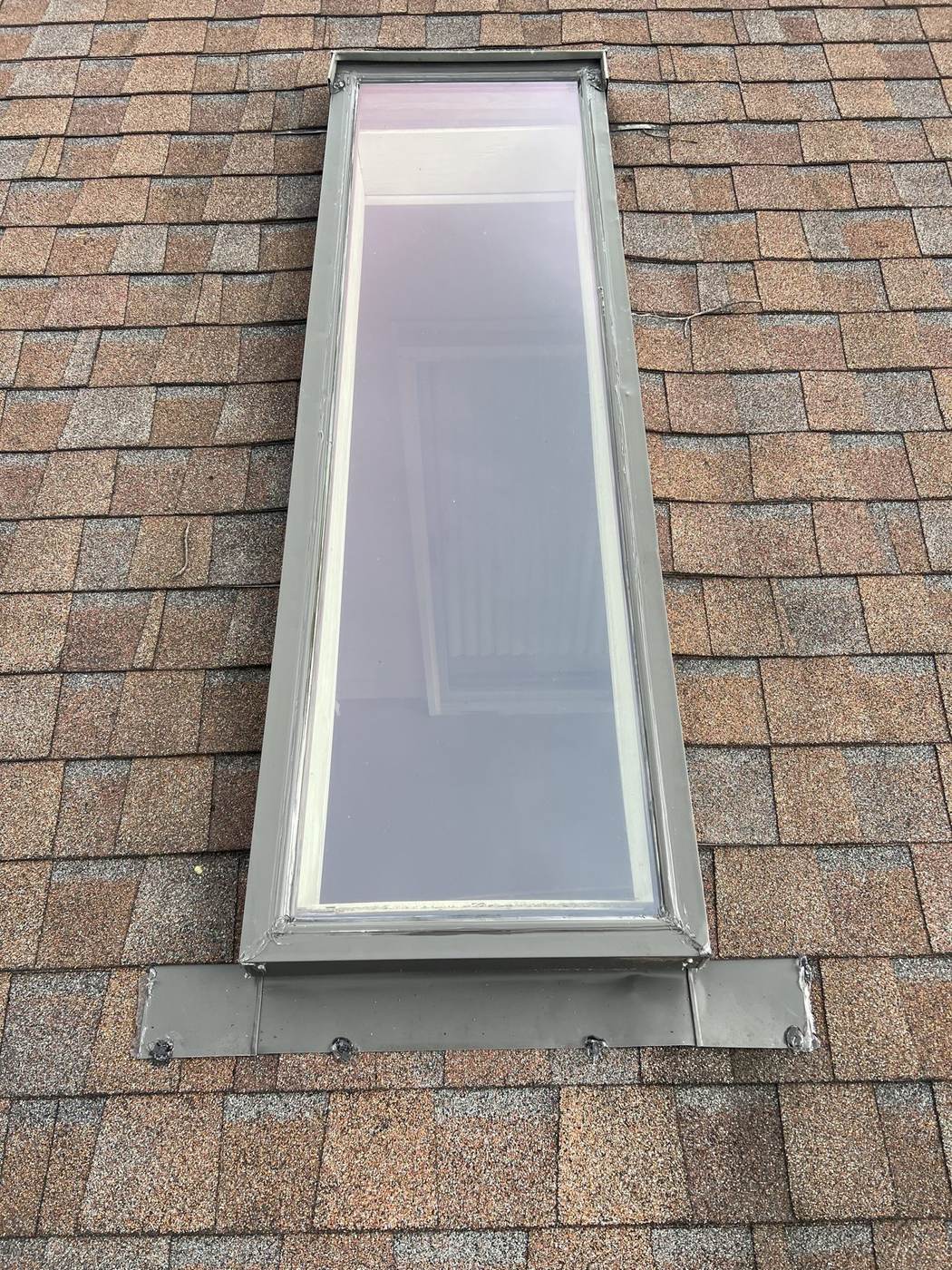
Skylight Flashing Repair — $500–$1,200
Skylights leak. Not because skylights are bad, but because the flashing around them — the metal that seals the skylight to the roof — is a complex detail that ages faster than the field shingles. The most common scenario: the shingles around a 15-year-old skylight are fine, but the step flashing has deteriorated and water is getting in at the corners.
A proper skylight flashing repair means removing shingles around the skylight, installing new step flashing and ice-and-water shield, and re-shingling. Sometimes the skylight itself is fogged or cracked, in which case replacing the unit at the same time makes sense — the labor overlaps heavily. A new curb-mounted skylight adds roughly $400–$800 in material to the job.
Typical range: $500–$1,200 for the flashing repair alone. If the skylight unit itself is shot, budget for a replacement — the flashing has to come off anyway.
Between service calls, a tube of
roof sealant
Affiliate link placeholder — real link added later.can temporarily seal a suspicious flashing detail — but it's a stopgap, not a fix. Flashing failures need to be re-done, not caulked over.
Chimney and Dormer Flashing — $600–$1,500
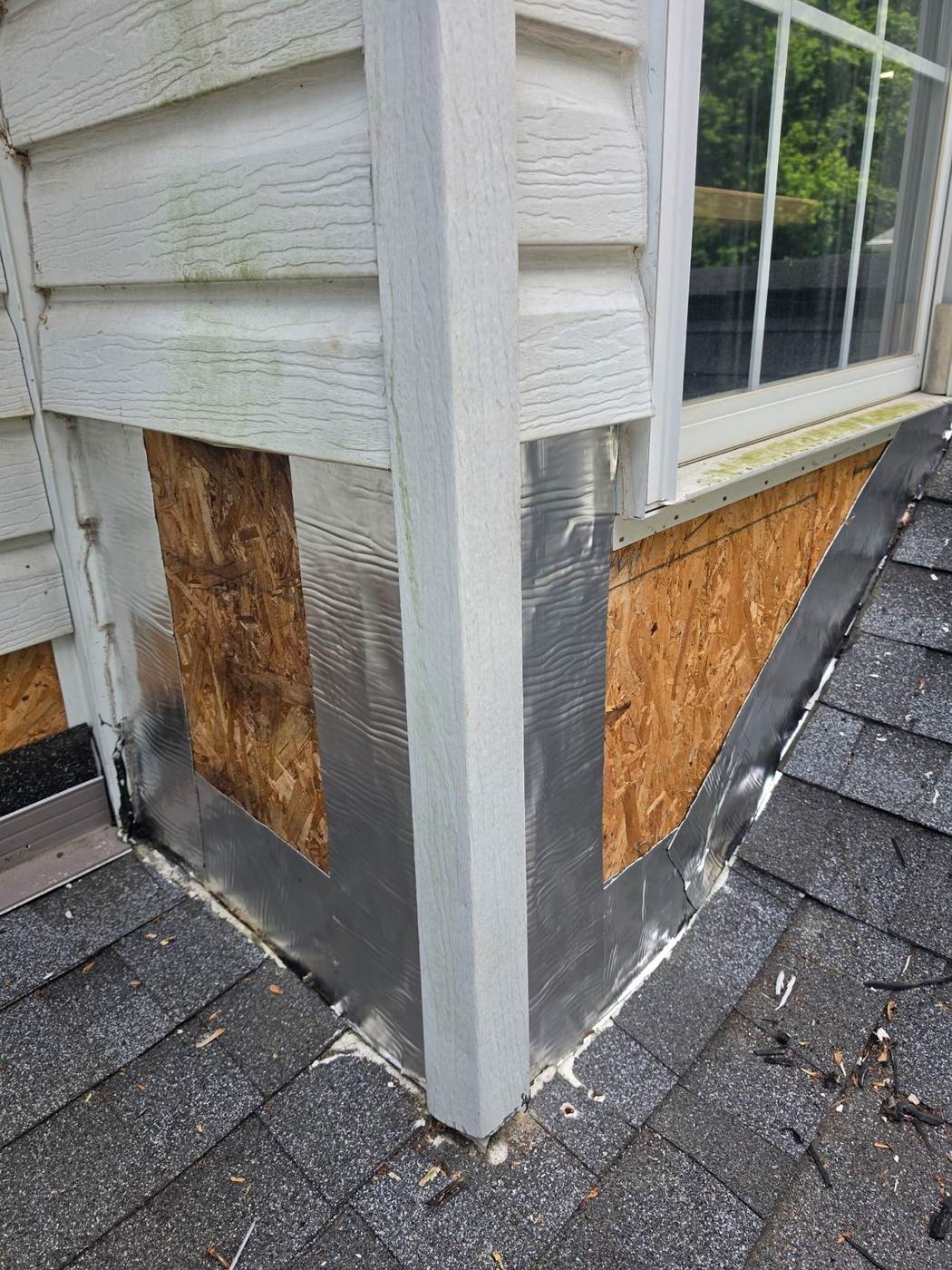
Chimneys and dormers are where roofs meet vertical walls, and those intersections are the most leak-prone details on any sloped roof. Step flashing, counter flashing (the metal set into the chimney mortar joints), and the cricket or saddle behind a wide chimney all need to be right.
Chimney flashing repair typically runs $600–$1,000; dormers $800–$1,500 depending on size and faces. These are labor-intensive: shingles come off around the chimney or dormer, new flashing and ice-and-water shield go down, everything gets re-shingled. Crumbling chimney mortar may need a mason to repoint before new counter flashing can be set.
What Drives Your Price Up or Down
Two homes can need the "same" repair and get quotes that differ by 50% or more. Here's why:
Roof pitch. A walkable 4/12 or 5/12 pitch is fast, safe work. A steep 10/12 or 12/12 pitch requires staging, harnesses, and slower movement — expect steep-pitch premiums of 25–50% on labor.
Stories. A single-story ranch is easy access. A three-story colonial or a tall Baltimore townhouse adds setup time, ladder work, and material handling. Multi-story homes consistently cost more per repair.
Access. Tight side yards, nearby power lines, landscaping that can't be walked on, no truck access — every obstacle adds labor time.
Material. Standard architectural shingles are the baseline. Premium shingles, slate, cedar, and metal all cost more to work with — both the material and the specialized labor.
Extent. This is the big one. A one-pipe repair is a half-day's work for one or two people. A repair that touches four areas of the roof is most of a day. Labor scales with time on the roof, and time on the roof scales with how much of the roof needs attention.
Decking. If a repair area opens up to rotted plywood underneath, replacing a sheet or two of OSB adds material cost and time. It's the right thing to do — patching over rotten deck is money wasted — but it does move the number.
Baltimore Rowhouse Flat Roofs: Priced Differently
One Maryland-specific note: most Baltimore rowhouses have flat or low-slope roofs, and repair pricing on those works differently. Flat-roof repairs are typically priced per square foot rather than by the feature, and the materials (modified bitumen, EPDM rubber, or coatings) have their own cost structure. A small flat-roof patch might run $400–$800, while a full recoat is priced by roof area. If your rowhouse roof is the question, our flat roof coating guide walks through the options.
Ballpark vs. Quote: How to Use These Numbers
These ranges are for planning. The number that matters is the one from a contractor who actually looked at the roof — surprises (rotted decking, hidden patches, fragile old shingles) are common.
When comparing quotes, make sure each one covers the same scope: same repair area, same materials, same underlayment details. A $400 pipe boot quote and a $600 pipe boot quote aren't comparable if one includes new shingles woven around the repair and the other is a surface patch. Ask what's included. An
moisture meter
Affiliate link placeholder — real link added later.in the attic confirms whether a leak is active before anyone starts work — a $30 tool that takes the guesswork out of "is it still leaking?"
The Bottom Line
Most Maryland roof repairs fall in the $300–$2,500 range, with the most common jobs — pipe boots, ridge caps, small shingle patches — clustering in the $300–$800 band. Steep pitches, multiple stories, and hidden decking damage push prices up; simple, accessible, single-area repairs stay at the low end. Use these ballparks to sanity-check quotes, and be suspicious of any quote that comes without someone actually getting on the roof.
A real number for your roof only comes from someone actually looking at it. Use the ranges above to spot a quote that's out of line, and get the diagnosis in plain language before you agree to anything.