Wood vs. Composite Decking: An Honest Comparison for Homeowners
The wood-versus-composite decision usually shows up at one of two moments: you're replacing a deck surface that has worn out, or you're pricing a new deck and the two quotes look like they're for different houses. Composite is marketed as the obvious upgrade and wood is marketed as the budget option, and both pitches leave out the parts that matter. This guide compares them the way a homeowner actually lives with them — cost over time, maintenance, heat, repairs, and how each one ages — so you can match the material to your budget and your tolerance for upkeep.
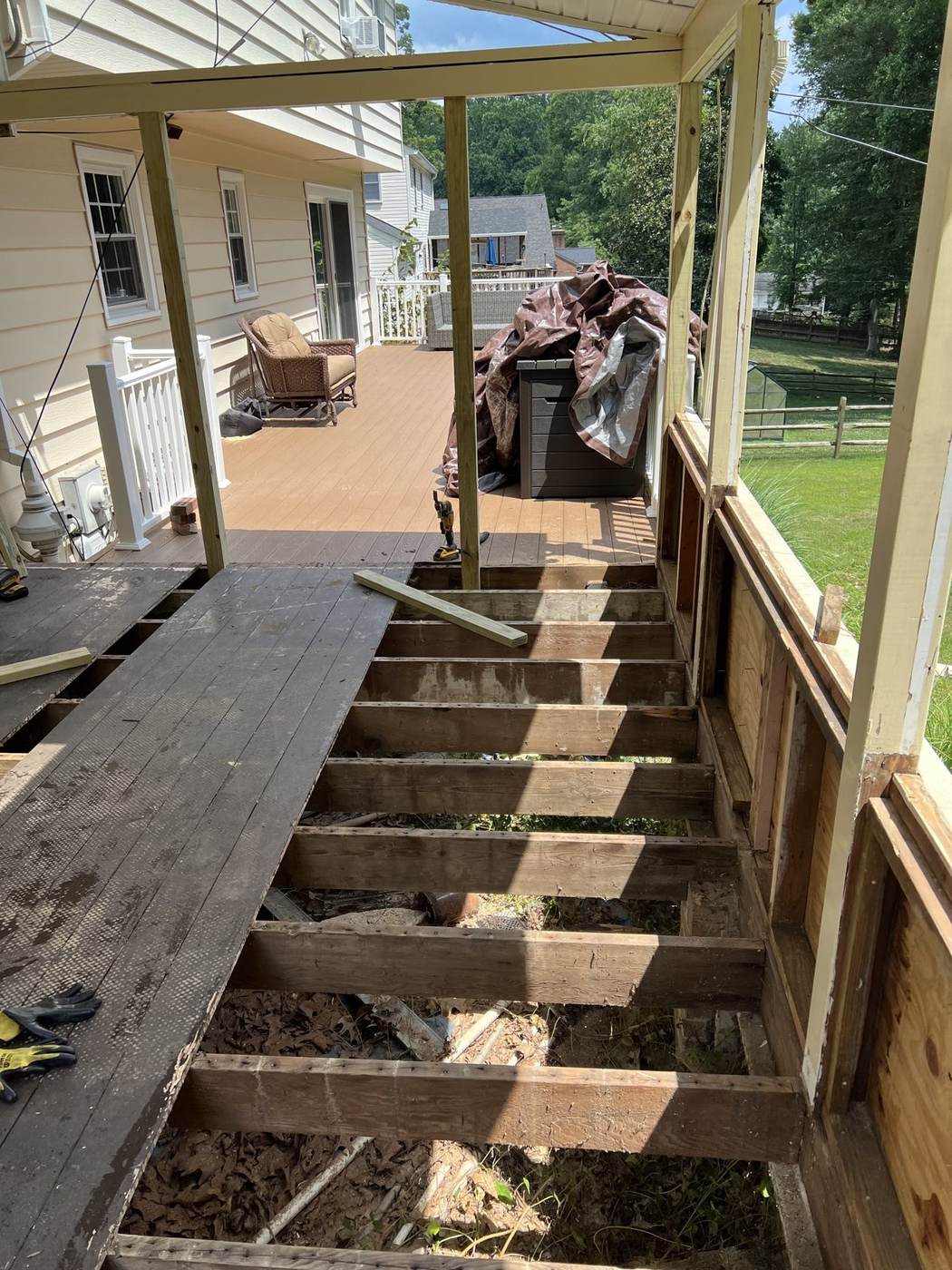
One thing to settle first: in most deck projects, only the surface changes. The frame underneath is pressure-treated lumber in nearly every residential deck, including composite ones. Our guide to deck restoration vs. replacement covers how to judge that frame, because its condition decides whether this comparison is even your decision to make yet.
What Each Material Actually Is
Pressure-treated wood is southern yellow pine (in the East) infused with preservatives that resist rot and insects. It's the default decking of the last forty years: inexpensive, strong, available everywhere, and happy to be cut and fastened any way you like. Cedar and redwood are the traditional upgrades — naturally resistant, prettier, pricier, and mostly a western supply chain. Exotic hardwoods like ipe sit above those in both cost and durability.
Composite decking is manufactured board: a blend of wood fiber and plastic, in modern products usually wrapped in a polymer cap on three or four sides. The cap is what you see and walk on, and it's what resists staining and fading. Fully synthetic PVC decking is the cap material with no wood core at all. Quality between brands and product tiers varies more than most homeowners expect — a budget composite and a premium capped board are barely the same product category.
Upfront Cost: The Gap Is Real
Composite boards typically cost two to four times what pressure-treated boards cost per linear foot, and the framing, footings, and railing portions of a job don't get cheaper to offset it. Anchored to numbers from our deck cost guide: fully replacing a 300 square foot deck with pressure-treated lumber runs roughly $12,000–$20,000+ in Maryland — an illustrative range for a typical mid-size deck, not a guaranteed average: deck size and height, materials, railing and stair choices, and the structural work a frame needs move real quotes considerably in both directions. The same project in mid-tier composite commonly lands well above that range, and premium composite or PVC with a picture-frame border and hidden fasteners goes higher still.
Labor narrows the gap slightly in the other direction than people expect: composite installs at about the same speed as wood, and hidden-fastener systems can add time. Where composite genuinely claws money back is later — which is the maintenance section.
Maintenance: The Real Difference
This is the section that decides most purchases, so here it is plainly.
Wood needs its finish renewed on a cycle: a penetrating stain every 2 to 3 years in Maryland's climate (our deck restoration cost guide breaks down what that costs professionally; it's a very doable DIY weekend as well). Let the cycle lapse and the wood grays, checks, and splinters — restorable for a while, but the neglect compounds. Wood also needs periodic board-level attention: a split board here, a popped fastener there.
Composite eliminates the stain cycle entirely. What it does not eliminate is cleaning: composite gets dirty, grows algae film in shade, and shows pollen and leaf tannins just like any surface. Plan on a wash once or twice a year with soapy water and a soft brush. "Maintenance-free" is marketing; "maintenance-light" is accurate — budget an hour or two a year instead of a weekend every other year, and never a stain bill.
Over 15 years, a professionally maintained wood deck's stain bills can approach the original cost difference between the two surfaces. DIY the staining and wood stays far cheaper. That math — your labor or your money — is the honest core of the decision.
Lifespan and How Each One Fails
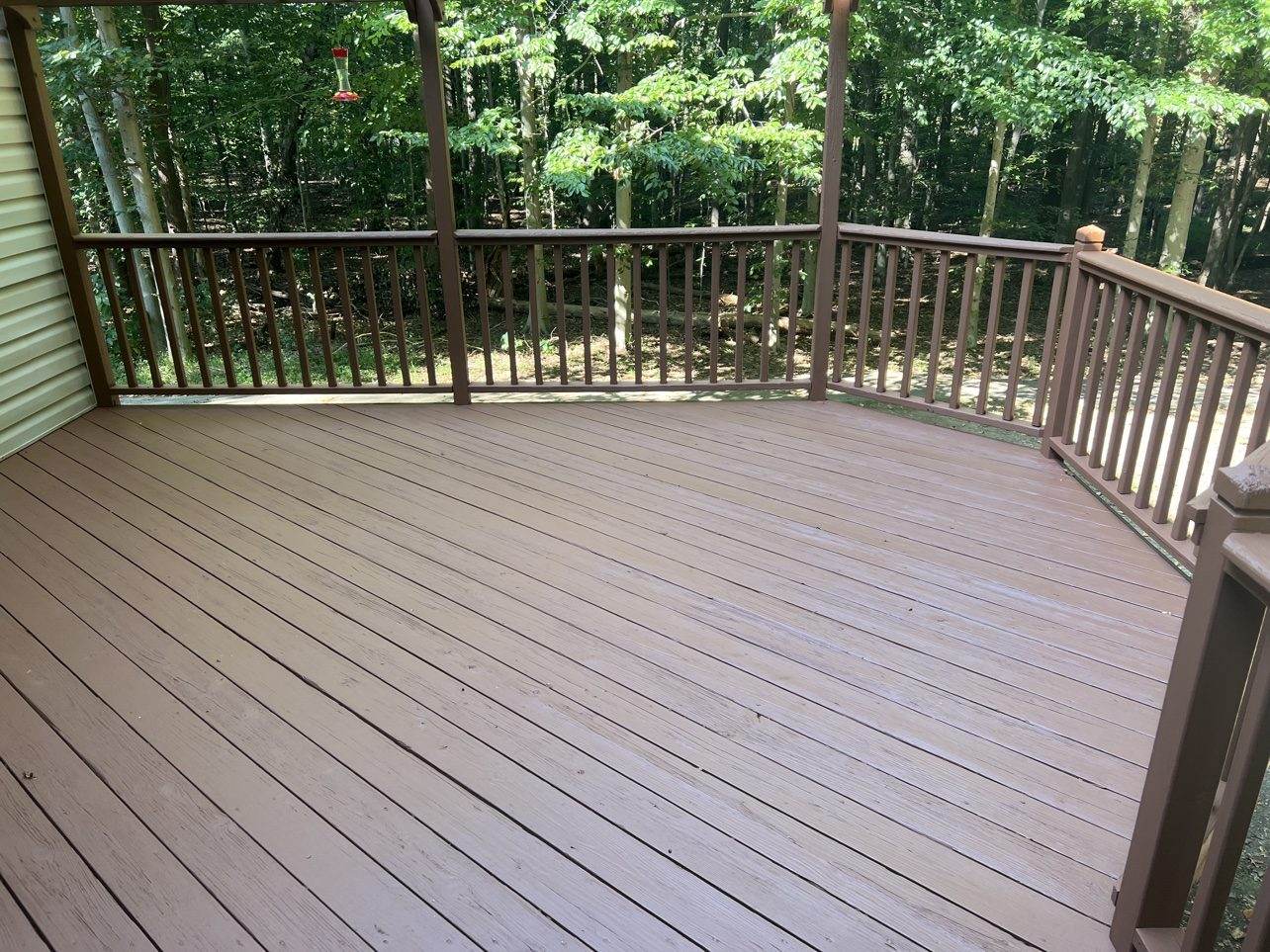
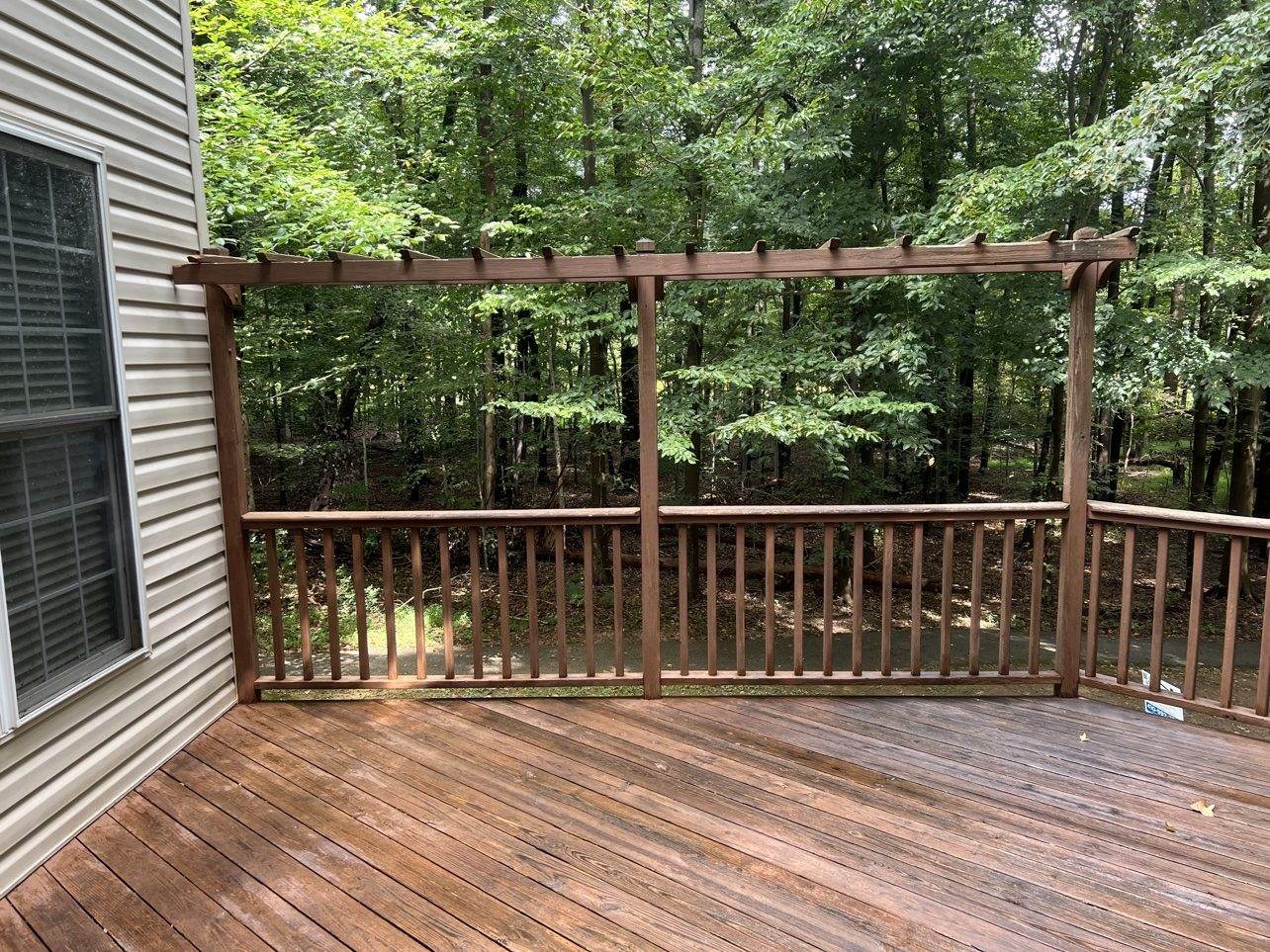
Wood decking boards last roughly 15 to 20 years with their finish maintained, less in deep shade or ground-hugging decks that never dry. Wood fails visibly and gradually: surface rot in the boards that hold water, soft spots at fastener lines, end grain splitting. Individual boards are cheap and easy to replace, which stretches a wood surface's practical life considerably.
Composite boards carry warranties of 20 to 30 years against rot and insects (they don't rot, and bugs aren't interested) and the boards themselves generally outlast wood. Read the warranty's fade-and-stain terms rather than the headline years, and know the failure mode is cosmetic: scratches that can't be sanded out, stains that set into the cap, and color fade — noticeable on early-generation boards, milder on modern capped products, but present. And the caveat that matters most: a 25-year board on a 15-year-old frame is a mismatched investment. The frame still rots on a wood schedule.
Heat, Feel, and Looks
Heat is composite's genuine weakness. In full summer sun, composite — especially dark colors — gets noticeably hotter underfoot than wood, hot enough to matter for bare feet and dog paws. Lighter colors and shaded decks mostly erase the issue. Maryland's humid July afternoons are exactly the test case; if your deck is a south-facing sun deck, stand on a sample board at 2 p.m. before you commit to a dark composite.
Feel and sound: wood feels and sounds like wood. Composite feels denser and more uniform, flexes a bit more between joists (which is why many products specify tighter joist spacing, especially on diagonals and stairs), and can develop static in dry weather. Splinters belong entirely to the wood column: a bare-foot household with small kids will notice their absence.
Looks: wood's grain is real because it is; composite's embossed grain has gotten good, and it holds its color uniformly while wood's stain weathers unevenly between recoats. Neither wins — they suit different houses. A stained wood deck against a wooded lot and a clean-lined composite against a modern renovation both look right.
Repairs and the Long Tail
A wood board that splits in year nine is a few dollars of lumber, common tools, and an hour — and the repair weathers in to match. A damaged composite board is the same hour of work but a procurement problem: you need the same product, color, and ideally production era, because colors shift between runs and lines get discontinued. Smart composite owners stash a few spare boards from the original build in the garage. Neither material forgives a rotten frame — but only wood lets you refinish your way out of cosmetic damage. Composite's surface is final; wood's is renewable.
The Bottom Line
Choose wood if the budget is real, you like wood's look and feel, and you'll actually keep the stain cycle — or pay someone to. Choose composite if this is a long-horizon home, the surface is a keeper deck you'll use daily for 15-plus years, and you'd rather spend money once than weekends forever. Choose neither until the frame has been honestly inspected — the best surface in the world doesn't rescue soft joists, and a restored wood deck on a sound frame beats a composite surface on a dying one every time.